

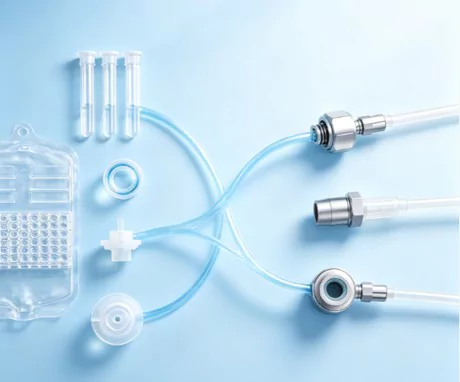
The contemporary healthcare landscape is increasingly characterized by specialized clinical procedures and targeted therapeutic interventions. Consequently, the demand for highly specific, purpose-built diagnostic and surgical tools has accelerated. For distributors, healthcare networks, and original equipment manufacturers (OEMs), relying solely on standardized, off-the-shelf components often presents limitations in performance, integration, and user experience. In this complex ecosystem, custom product design has transitioned from being a niche engineering service to a fundamental business strategy. By aligning mechanical, electronic, material, and manufacturing requirements with the intended workflow, custom engineering can improve product fit and manufacturability.
How Customization Drives B2B Medical Device Sales
In the highly regulated and competitive B2B healthcare market, product differentiation extends far beyond surface-level aesthetics. Hospital procurement committees, clinical directors, and specialty distributors evaluate equipment based on its capacity to improve patient outcomes, enhance operational efficiency, and reduce long-term costs. This rigorous evaluation process highlights the importance of purpose-built solutions. When a product is designed to address a defined requirement—such as improving component fit, flow-path configuration, assembly efficiency, or equipment integration—it can offer a clearer value proposition.
Consequently, incorporating user-centric engineering directly impacts medical device sales. Sales strategies in this sector rely on demonstrating measurable clinical and economic value. A product tailored to integrate seamlessly into existing hospital infrastructure or to accommodate the ergonomic needs of a specific surgical specialty inherently possesses stronger market appeal. By removing the functional compromises often associated with generic instruments, custom-designed devices empower sales teams and distribution partners to present a highly targeted, problem-solving narrative to institutional buyers.
Integrating Human Factors Engineering and Usability
A critical component of customized design is the integration of human factors engineering (HFE). In the medical sector, usability is inextricably linked to patient safety and procedural efficacy. Customization allows engineers to design interfaces, grip structures, and feedback mechanisms that align with the cognitive and physical realities of the healthcare professionals using them daily.
Unlike mass-produced items that must cater to a broad, generalized user base, customized equipment can be calibrated for specific environments, such as high-stress emergency rooms or precision-focused microsurgery suites. This specialized focus can help reduce use-related risks and inform interface design, training requirements, and workflow efficiency. For B2B buyers, these attributes translate into reduced liability, lower training costs, and higher adoption rates among clinical staff, further cementing the commercial viability of the customized device.
The Strategic Value of a Custom Medical Equipment Manufacturer
Executing a customized product strategy requires specialized infrastructure and multidisciplinary expertise. For many product developers and healthcare brands, establishing these capabilities entirely in-house is capital-intensive and time-consuming. This operational challenge underscores the strategic value of partnering with a proficient custom medical equipment manufacturer.
Third-party manufacturing and design partners, such as Kingsin Technology, function as an extension of a client’s own research and development division. Kingsin offers customization support for biomedical devices, modules, consumables, and related components based on project requirements. Rather than fragmenting the development process across multiple disparate vendors, an integrated manufacturer provides a cohesive, one-stop solution. This comprehensive approach typically covers industrial design, mechanical engineering, prototyping, and scalable manufacturing. By centralizing these disciplines, OEMs can mitigate risks associated with intellectual property transfer, reduce communication silos, and accelerate the transition from initial concept to commercial-scale production.
Streamlining Regulatory Documentation Through Integrated Design
One of the most complex hurdles in bringing a new medical technology to market is navigating the labyrinthine global regulatory landscape. Regulatory bodies require exhaustive documentation detailing every phase of product development, from initial risk assessments and material biocompatibility testing to final quality control protocols. When design and manufacturing are treated as separate, disconnected phases, compiling this documentation often becomes a logistical bottleneck.
A specialized manufacturing partner approaches product development holistically. Capable organizations structure their operations so that critical regulatory documentation is generated concurrently with the engineering and prototyping phases, based strictly on each customer’s specific requirements. This integrated methodology can support the controlled development of drawings, BOMs, inspection reports, design records, and other documentation defined in the project quality plan. By designing for compliance from the outset, developers can avoid costly late-stage redesigns, streamline the auditing process, and expedite regulatory clearances. For business buyers and distributors, this translates to a more reliable supply chain and faster time-to-market.
Advanced Material Science and Component Traceability
Another distinct advantage of custom product design lies in the precise control over material selection and component sourcing. Off-the-shelf devices often utilize standardized medical-grade plastics or metals that, while broadly acceptable, may not represent the optimal choice for a highly specific, advanced application. Customization allows engineers to select materials according to the product’s mechanical, chemical, processing, and applicable biocompatibility requirements.
Furthermore, B2B procurement professionals place immense importance on supply chain transparency and component traceability. A dedicated custom manufacturing partner implements rigorous quality management systems that track every material lot and manufacturing parameter. This level of granular control is crucial for post-market surveillance and for satisfying the stringent auditing requirements of international healthcare networks. By offering bespoke material solutions and uncompromising traceability, customized product developers provide business buyers with the reliability and risk mitigation they demand.
Conclusion
In a healthcare industry defined by rapid technological advancement and rigorous quality standards, the ability to deliver highly specialized, problem-solving equipment is a paramount competitive differentiator. Custom product design transcends basic aesthetic modifications; it is a comprehensive strategy that aligns engineering precision with specific clinical needs and strict regulatory mandates.
By collaborating with an experienced custom medical equipment manufacturer, businesses can leverage integrated design, scalable production, and meticulous regulatory support. This collaborative, one-stop approach not only streamlines the development lifecycle but also results in superior products that resonate strongly with institutional buyers. Ultimately, investing in bespoke engineering and strategic manufacturing partnerships is a proven methodology for driving innovation, expanding market presence, and achieving sustained commercial success in the medical technology sector.