

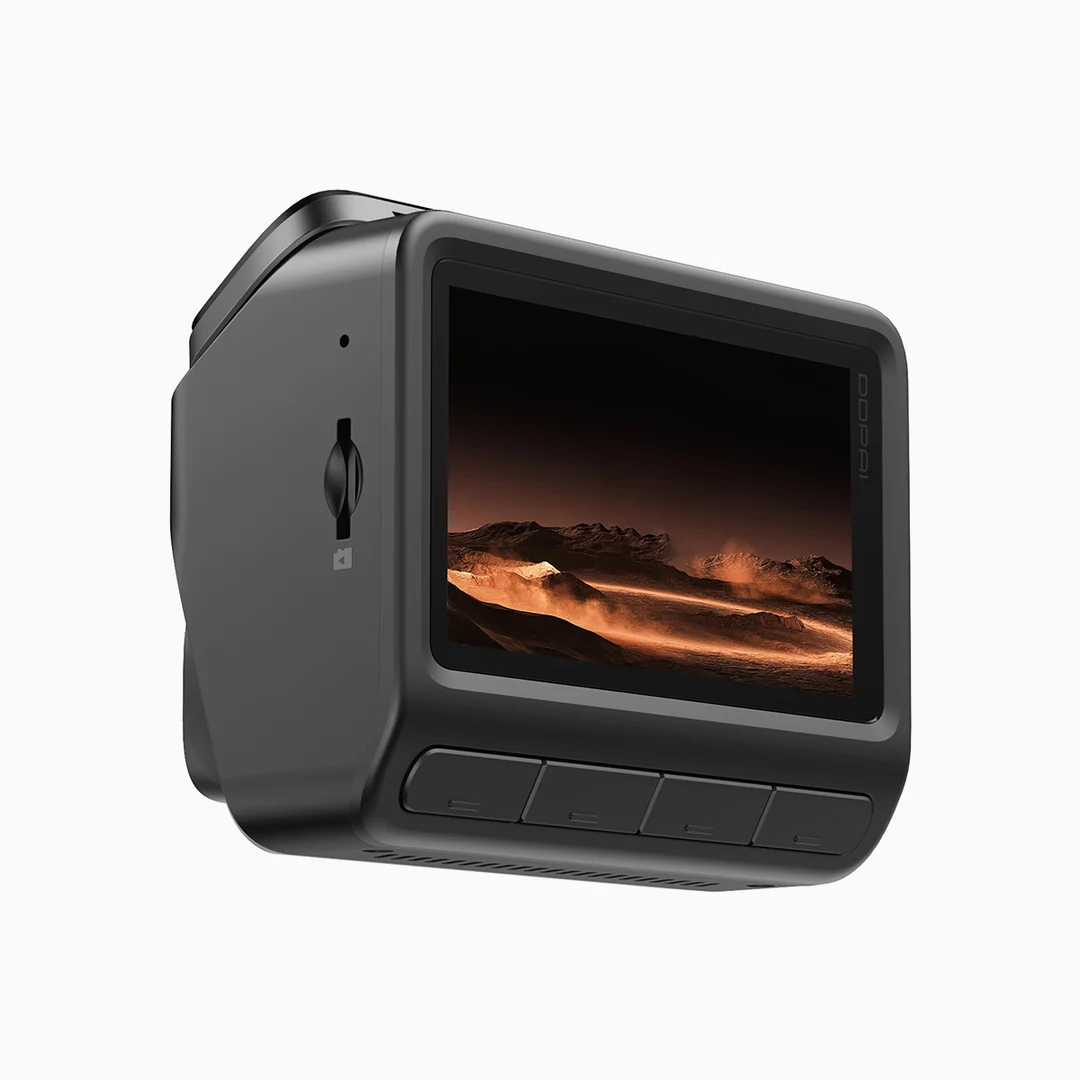
A dash camera has become a practical accessory for drivers who want a record of what happens on the road. But as image quality improves, shoppers considering a 4K dash cam face a common question: is 4K actually necessary, or is a lower-resolution camera enough? The answer depends on how, where, and how often you drive.
What Does 4K Mean in a Dash Cam?
In simple terms, 4K refers to video with a resolution of about 3840 × 2160 pixels. Compared with Full HD, this provides substantially more image information in each frame. That extra detail can be useful when reviewing road incidents, traffic situations, signs, or other visual information captured by the camera.
However, resolution is only one part of recording quality. Lens design, image sensors, image processing, frame rate, viewing angle, and performance in low light also affect how useful the footage is.
Why Drivers May Prefer a 4K Dash Cam
The main advantage of higher resolution is detail. When footage needs to be reviewed after an unexpected event, sharper images can make it easier to examine what was happening around the vehicle. This can be particularly useful for drivers who spend long hours on busy roads or regularly travel at higher speeds.
A higher-resolution camera can also provide more flexibility when reviewing footage. Fine details may remain easier to inspect when a specific moment is paused or enlarged. It does not guarantee that every license plate or distant object will be readable, but it can provide more visual information than lower-resolution recording under suitable conditions.
Do You Really Need 4K?
Not every driver needs the highest available resolution. Someone who mainly makes short local trips may be satisfied with a dependable Full HD or 2K model. For these users, installation, reliability, storage, night performance, and ease of use may matter more than maximum resolution.
A 4K model becomes more compelling for drivers who want detailed evidence, travel frequently, or prefer a more advanced recording system. It can also make sense for vehicle owners who are willing to invest in better imaging and additional features rather than choosing a camera based only on its basic recording function.
A Professional Dash Cam Is More Than Resolution
When comparing a professional dash cam, consumers should look beyond the number of pixels. Dual-channel recording, parking monitoring, connectivity, storage capacity, GPS support, and low-light technology can all affect everyday usefulness.
DDPAI’s Z Series illustrates this broader approach. The Philippines collection includes models such as the Z50 Pro Dual, Z60 Dual, Z60 Pro Series, Z90 Master, and other configurations. The range covers different recording and coverage requirements, giving consumers more than one way to step up from an entry-level camera.
For example, the DDPAI Z50 Pro Dual combines 4K front recording with 1080P rear recording. Its official specifications list 3840 × 2160 at 25fps for the front camera and 1920 × 1080 at 25fps for the rear camera. It also supports up to a 512GB microSD card, Wi-Fi 6, Bluetooth 5.4, GNSS, and a 3-inch screen.
For drivers looking for broader vehicle coverage, the DDPAI Z60 Dual offers 4K front and 1080P rear recording. Its product specifications list 140° front and 125° rear viewing angles, 32GB of internal eMMC storage, and support for up to a 512GB microSD card. The Z60 also supports optional 4G-related functions, depending on the selected configuration.
The flagship DDPAI Z90 Master goes further for buyers who want three-channel coverage. DDPAI lists Front 4K, Rear 4K, and Interior 3K recording for the Z90 Master 3CH configuration, together with dual Sony STARVIS 2 sensors and Triple HDR technology.
Consider the Features You Will Actually Use
Before buying, think about your driving pattern. If you commute daily through dense traffic, clear front footage and reliable storage may be priorities. If you frequently park in public areas, parking monitoring may be more relevant. For drivers who need remote access, compatible 4G functions can add another layer of convenience.
When comparing different dash cam options, check whether 4K applies to the front camera only or to multiple channels, and confirm frame rate and rear-camera resolution. Storage also matters because higher-resolution footage can require more capacity. It is equally important to check whether smart functions need additional hardware, such as a hardwire kit for parking monitoring or an optional 4G module. Reviewing the official specifications and included accessories helps ensure the chosen system matches your driving needs. It also helps avoid paying for features you may never use.
Choosing Through DDPAI Philippines
For consumers considering a 4K dash cam, DDPAI Philippines provides the Z Series as a range of higher-spec options rather than a single configuration. The official Philippines store presents the Z Series as a screen-equipped lineup with several higher-spec configurations and offers local support, warranty coverage, and after-sales service.
Ultimately, you do not need 4K simply because it is the newest resolution standard. You need the right combination of image quality, coverage, reliability, storage, and useful features. If detailed footage is important to you, a 4K model from the DDPAI Z Series can be a practical upgrade worth considering.