

In rodent studies, grip force values can vary significantly even when researchers use the same animal strain and experimental model. Small differences in how an animal grips the bar, how force is applied, and how results are recorded may influence the final data interpretation. For neuroscience, muscle function, and pharmacological studies, establishing a consistent measurement workflow is essential. BioMed Easy develops life science instruments and software that support reliable behavioral and physiological research.
Grip Strength Data as an Indicator of Rodent Functional Ability
Grip strength measurement is commonly used to evaluate neuromuscular performance in mice and rats. Unlike simple observation of movement behavior, quantitative force measurement provides researchers with numerical data that can be compared across experimental groups.
In neuroscience research, grip strength data can help identify changes in motor function caused by neurological disorders or genetic modifications. A reduction in force output may reflect changes in motor function associated with neurological conditions or neuromuscular impairment.
In addition, grip strength evaluation is frequently applied in aging research, muscle-related studies, and preclinical drug development. Researchers can use changes in force production to assess disease progression, treatment response, or functional recovery.
Because grip strength reflects both muscle capability and nervous system control, measurement consistency is critical. A standardized grip strength test in mice allows researchers to reduce experimental variation and improve the reliability of behavioral data.
Selecting Forelimb and Hindlimb Measurements Based on Research Goals
Forelimb and hindlimb measurements provide different information about animal motor performance. Choosing the appropriate approach depends on the biological function that researchers want to evaluate.
Forelimb grip strength testing focuses on upper-body pulling force and coordination ability. It is often used in behavioral neuroscience studies where researchers need to assess changes in motor control, muscle strength, or movement coordination.
Hindlimb measurement provides information related to lower-body strength and locomotor ability. It can be valuable in studies involving mobility impairment, neuromuscular disorders, and conditions that affect overall movement performance.
Some studies combine both forelimb and hindlimb measurements to obtain a broader understanding of functional changes. Comparing results from different regions of the body can help researchers determine whether changes are localized or related to overall motor decline.
Creating a Consistent Workflow for More Reliable Measurements
The testing procedure itself has a major impact on data quality. Before measurement, animals should be allowed sufficient time to adapt to the testing environment. This helps reduce stress-related changes that may affect performance.
During testing, consistent handling is essential. Researchers should maintain similar animal positioning, ensure proper contact between the paws and the grip bar, and apply force in a controlled direction. Differences in pulling methods may create unnecessary variation between trials.
The number of measurements and rest intervals should also be standardized. Multiple trials can help reduce the influence of accidental performance changes, while appropriate recovery time prevents fatigue from affecting later measurements.
By controlling these procedural factors, researchers can create a repeatable testing environment and improve the comparability of results between different experimental groups.
Managing Variables That Affect Grip Strength Results
Grip strength data can be influenced by multiple biological and experimental factors. Researchers should consider these variables when designing studies and analyzing results.
Animal-related factors include age, body weight, species differences, and health condition. Younger and lighter animals may naturally produce different force values compared with older or larger animals. For this reason, researchers may need to consider normalization methods when comparing different groups.
Environmental conditions can also influence performance. Testing time, laboratory conditions, handling experience, and previous exposure to the equipment may affect animal behavior during measurement.
Data processing methods are equally important. Researchers may analyze maximum force values, average results from repeated trials, or normalized force values depending on the purpose of the study. A consistent analysis approach helps improve the accuracy of conclusions.
Selecting Equipment for Accurate Grip Strength Measurement
Reliable equipment plays an important role in maintaining measurement consistency. Researchers should evaluate whether a system can provide accurate force detection, stable operation, and efficient data collection.
A suitable grip strength measurement system should support different experimental requirements, including forelimb and hindlimb evaluation in both mice and rats. Accurate force sensors help capture small changes in muscle performance, while stable recording functions reduce manual errors.
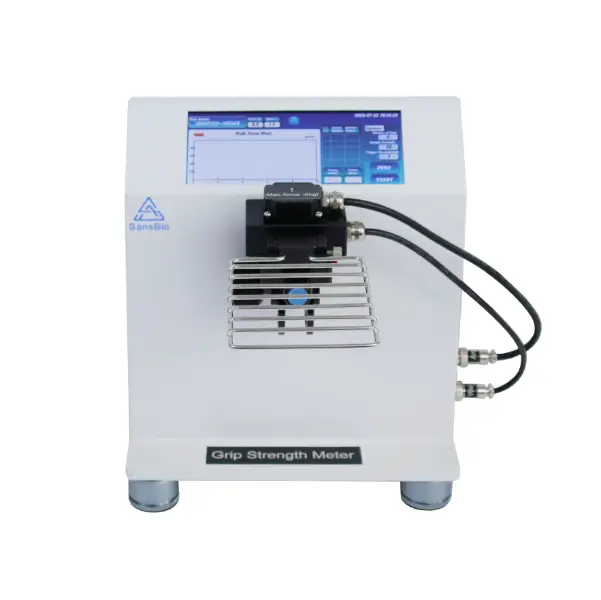
The Grip Strength Meter Pro from BioMed Easy is designed for laboratory animal muscle strength assessment. The system supports quantitative measurement of grip force and helps researchers collect consistent data for neuroscience, behavioral, and pharmacological studies.
When selecting equipment for a grip strength test in mice, researchers should consider not only measurement accuracy but also workflow efficiency, repeatability, and compatibility with different research applications.
Applying Standardized Grip Strength Data in Preclinical Studies
Once reliable measurement procedures are established, grip strength data can support various areas of preclinical research.
In neuroscience studies, standardized results can help researchers evaluate motor impairment and monitor functional changes in disease models. In pharmacological research, grip strength measurements provide additional evidence when assessing whether a treatment influences physical performance.
For aging and muscle studies, repeated grip strength evaluations can help track functional decline or recovery after intervention. Because the measurement provides quantitative data, researchers can compare changes over time rather than relying only on visual observation.
Accurate grip strength analysis improves the value of experimental findings and supports more reliable research conclusions.
Advancing Rodent Motor Function Research with BioMed Easy
Standardizing forelimb and hindlimb grip strength measurements requires careful control of testing procedures, data evaluation methods, and equipment performance. By reducing measurement variation, researchers can obtain more reliable information about muscle function and motor ability.
With expertise in life science instruments and software development, BioMed Easy provides solutions for animal behavior, neuroscience, pharmacology, and physiological research. Its Grip Strength Meter Pro supports consistent motor function evaluation for universities, research institutions, CROs, and pharmaceutical companies, helping researchers improve the quality and efficiency of rodent studies.