

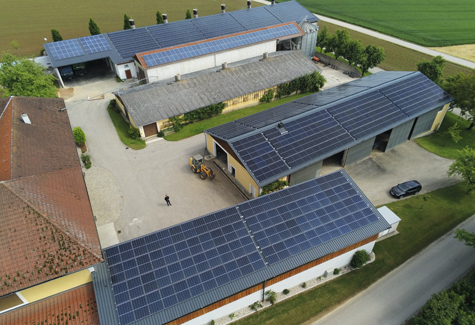
Rapid expansion across automated manufacturing and heavy industry demands stable electrical throughput to maintain continuous operational schedules. Volatile market tariffs and sudden utility voltage drops create financial and operational exposure for power-intensive facilities. Integrating modern industrial energy storage can act as a buffer by storing energy during low-demand periods and discharging it during peak tariff windows.
Facilities aiming to optimize grid engagement utilize advanced power conversion hardware to mitigate dynamic peak charges. Engineering partners such as Dunext design resilient system topologies that integrate directly with local industrial distribution networks. Managing peak demand can reduce applicable utility charges, while suitable power-control equipment can support power quality management.
Streamlined power conversion ensures minimal energy losses during charge-discharge cycles. Appropriate inverter controls can support reactive-power management and power-factor performance across the plant network.
Thermal Management Mechanics in Dense Battery Racks
High-current discharge operations generate substantial thermal energy inside battery enclosures, threatening long-term cell life. Liquid cooling configurations circulate chilled fluid across cold plates to keep internal temperatures balanced across all modules. Maintaining more uniform cell temperatures can reduce localized hot spots that may accelerate battery degradation.
Enclosures using air cooling frequently experience internal temperature gradients, resulting in uneven cell aging and lower operational efficiency. Modern energy storage solutions utilize specialized fluid circulation loops to maintain narrow temperature bands across dense cell assemblies. The PowerHill 233kWh cabinet uses liquid cooling to support consistent thermal conditions during charging and discharging.
Efficient thermal dissipation can reduce reliance on air-moving equipment in systems designed around liquid cooling. Reduced auxiliary energy usage directly enhances overall system round-trip efficiency.
Structural Safety Engineering and Isolation Systems
Deploying large electrochemical storage systems in industrial settings requires multi-tier safety mechanisms to protect facility personnel and nearby physical assets. Off-gas detection can provide early warning of abnormal battery conditions and support integrated protective responses. Physical barrier separation prevents thermal events from spreading across adjacent battery strings.
Aerosol suppression systems can be integrated with detection and control mechanisms to provide localized fire protection. Sub-20-millisecond automatic transfer capabilities protect sensitive computer numerical control (CNC) equipment from line sags and blackouts. Isolating problematic modules can allow unaffected sub-systems to continue supporting critical loads, subject to available capacity and system configuration.
Heavy-duty cabinet housing shields internal components from external industrial impacts. Sealed internal electrical zones protect high-voltage connections from dust and airborne particulates.
Intelligent Local EMS Control and Predictive Analytics
Internal energy management systems (EMS) function as the central brain of utility-connected battery storage infrastructure. Real-time telemetry tracks cell voltages, SOC percentages, and internal resistance metrics across every active rack. Local control algorithms adjust dispatch patterns instantly to balance dynamic site loads against variable grid prices.
Continuous cloud telemetry transmits operational diagnostics to central monitoring systems for predictive maintenance tracking. Detecting subtle shifts in internal resistance allows technicians to replace declining components prior to unexpected system outages. Automated telemetry platforms streamline operational reporting for facility management teams.
Intelligent load-shifting strategies optimize daily operational economics automatically. Visual dashboards give facility managers clear visibility into active power consumption trends.
Outdoor Enclosure Protection and Environmental Resilience
Industrial battery systems installed outdoors must withstand intense weather shifts, ranging from coastal humidity to extreme ambient heat. An IP67-rated enclosure provides dust-tight protection and protection against temporary water immersion under the specified test conditions. C5-rated anti-corrosion protection can improve resistance to corrosion in demanding environmental conditions.
Outdoor systems such as the PowerMount 5MWh container feature heavy-gauge steel construction designed to withstand severe environmental exposure. Multi-point door latches and weatherproof gaskets preserve internal climate stability regardless of external conditions. Shielding electrical power conversion units from humidity prevents internal short circuits and premature electronic failures.
Durable structural framing protects internal battery packs during ground shifts and seismic movement. Heavy-duty housing can support reliable operation in demanding industrial settings.
Financial Mechanics and Peak Demand Mitigation
In tariff structures that use maximum demand charges, manufacturing facilities may incur costs based on measured peak demand during defined billing intervals. Battery storage systems discharge instantly during high-load periods, flattening site demand profiles beneath expensive utility thresholds. Reducing peak demand can lower applicable demand charges on industrial utility bills.
Dynamic tariff arbitrage allows plant operators to charge battery banks using low-cost off-peak power or onsite solar generation. Discharging stored electricity during peak electricity windows reduces reliance on costly grid energy. Combining demand charge reduction with tariff arbitrage accelerates asset payback schedules.
Predictable energy costs protect industrial profitability against volatile electricity market fluctuations. Capital expenditure on storage hardware yields multi-year operational cost reductions.
Grid Support Functionality and Microgrid Integration
Beyond facility-level cost savings, commercial battery installations offer essential stability support to the broader distribution grid. Systems participate in primary frequency regulation markets by rapidly adjusting power output in response to grid frequency shifts. Providing fast frequency response generates supplementary revenue streams for industrial site operators.
Integrated solar-plus-storage topologies enable facilities to construct resilient local microgrids capable of operating independently from main utility feeds. During grid disruptions, islanding-capable microgrid configurations can continue supplying designated critical loads, subject to system capacity and control design. Restoring grid connectivity allows automated resynchronization without disrupting active industrial operations.
Flexible inverter architectures support bi-directional power flow between localized renewables, battery storage, and the utility grid. Multi-mode control settings enhance long-term facility resilience.
Strategic Investment Criteria for Facility Decarbonization
Modernizing industrial power infrastructure requires adopting scalable, intelligent battery hardware engineered for long-term operational performance. Facilities transitioning toward sustainable energy strategies rely on high-efficiency equipment to maximize renewable self-consumption. Prioritizing robust thermal design and layered safety protocols protects long-term infrastructure investments.
Technology developers like Dunext demonstrate how modular system engineering and intelligent cloud analytics support comprehensive industrial power management. Evaluating detailed physical specs, environmental protection ratings, and software integration capabilities helps business leaders select reliable equipment. Deploying dependable storage infrastructure establishes a solid foundation for sustainable, resilient industrial operations worldwide.