

Production teams weighing laser processing against mechanical cutting face a decision that reaches beyond cutting speed. Part geometry, material thickness, edge requirements, batch size, and downstream assembly all influence which method makes practical sense.
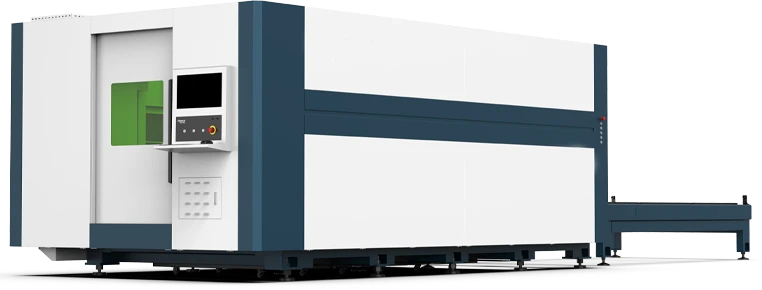
A fiber laser cutting machine can create intricate contours without a dedicated cutting die, while mechanical methods may remain economical for repetitive shapes or operations where tooling already exists. Hymson Laser Machinery offers equipment that manufacturers can evaluate within this broader production context, but the right choice depends on the work mix, quality expectations, and total workflow rather than one headline specification.
Matching Cutting Methods to Part Geometry
Complex contours often favor laser processing because the cutting path can be changed through programming rather than by manufacturing a new dedicated tool. Slots, small holes, angled profiles, and nested outlines can be produced within the limits of the material and machine configuration. This flexibility is useful for prototypes, customized enclosures, and short production runs, where design revisions might otherwise require repeated tooling adjustments.
Mechanical cutting covers several processes, including shearing, punching, sawing, and milling, each with different strengths. Shearing can process straight edges quickly, while punching suits repeated holes and forms when suitable tooling is available. Milling may be appropriate when features require controlled machining or when a part’s geometry cannot be produced economically through flat-sheet cutting alone. Comparing methods by geometry helps avoid treating every operation as a direct substitute for another.
The sheet metal laser cutting machine becomes especially relevant when a single order contains many distinct profiles. Programmed paths and nesting software can arrange parts across a sheet, potentially reducing material waste and simplifying engineering changes. Mechanical tooling may offer faster cycle times for high-volume, repeated shapes, but frequent design variation can increase tool-change and setup demands. A useful comparison considers how often the geometry changes, not just how many parts are produced.
Evaluating Edge Quality and Dimensional Requirements
Cut edges influence more than appearance; they can affect fit-up, coating adhesion, welding preparation, and assembly accuracy. Laser processing produces a narrow kerf and can maintain intricate profiles, although results depend on material grade, thickness, focus, gas settings, and cutting speed. Excessive heat input may create discoloration, dross, or a heat-affected zone that matters in applications with strict surface or metallurgical requirements.
Mechanical methods have their own quality considerations. Shearing can leave burrs or deformation near the edge, while punching may produce rollover, burnish, fracture, and burr zones. Tool condition, clearance, material properties, and machine rigidity all influence the result. These characteristics are not necessarily disadvantages: if the edge falls within the drawing requirements or will undergo later machining, the process may still provide a cost-effective outcome.
Quality comparisons should use measurable acceptance criteria rather than visual impressions alone. Dimensional tolerances, flatness, burr height, hole quality, surface condition, and the need for secondary finishing can be documented through sample parts. A fiber laser cutting machine may reduce certain tooling-related variations, yet it still requires appropriate calibration, stable material handling, and process verification. Trial production using representative parts gives engineers a more reliable basis for comparing achievable quality with the cost of maintaining it.
Understanding Workflow and Downstream Operations
Cutting is only one stage in sheet-metal production. Parts may proceed to deburring, bending, tapping, welding, coating, or final assembly, and the cutting method can affect the time and effort required at each stage. Laser-cut profiles may reduce the need for some tooling operations, but heat-related edge conditions or surface residue can create additional preparation in specific applications. The complete process route should be assessed before a machine is selected.
Mechanical cutting can integrate well with established production cells, particularly where punching, forming, and cutting operations share tooling or automated material handling. High-volume parts with stable designs may benefit from predictable cycle times and well-established work instructions. Conversely, low-volume custom jobs can incur more setup time when each new profile requires dedicated tooling. Labour availability, operator skill, changeover frequency, and floor-space constraints should all be included in the workflow comparison.
Equipment configuration matters when laser cutting is under consideration. Hymson Laser Machinery offers the HF-G-7X as part of its equipment lineup; its suitability should be checked against the published specifications, supported materials, working dimensions, and required cutting performance. Manufacturers should compare these details with actual production needs and request sample processing when possible. Product-specific claims should be verified against current technical documentation rather than assumed from the general capabilities of laser technology.
Conclusion
The choice between laser and mechanical cutting is best made by examining the production system as a whole. Geometry and design frequency shape the value of programming flexibility, edge requirements determine the acceptable quality window, and downstream operations reveal costs that cutting-speed figures may conceal.
Hymson Laser Machinery provides equipment for manufacturers to assess against their specific application needs, while a fiber laser cutting machine should be judged through verified trials and realistic operating data. A balanced comparison of tooling, material utilization, finishing, and production volume helps manufacturers select the process that fits both current orders and likely future demands.