

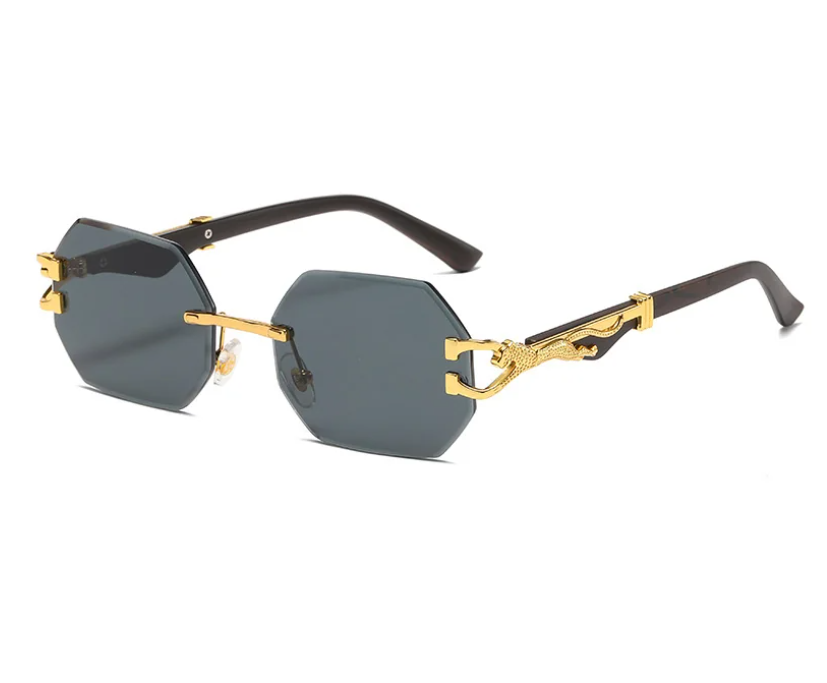
Eyewear manufacturing has evolved into a discipline where material science, digital design, and precision engineering converge. When a brand or distributor evaluates potential suppliers for metal frame sunglasses, understanding the production chain behind each pair becomes a practical necessity. The journey from raw metal stock to a finished frame involves multiple controlled stages — each influencing fit, durability, surface quality, and the consistency demanded by wholesale buyers. Far from a simple assembly process, the creation of metal eyewear relies on carefully sequenced techniques that determine whether a frame can meet the expectations of competitive retail markets.
Design Translation: From Concept to Technical Specification
Every metal frame begins as a design brief. Rather than loose sketches, production-ready sunglasses require precise three-view technical drawings that define the geometry of the frame front, bridge, temples, hinge seats, and nose pad attachments. These specifications are critical because even minor dimensional deviations — a fraction of a millimetre in bridge width or lens groove depth — can cascade into assembly misalignment and compromised fit.
Design teams convert hand-drawn concepts into CAD (Computer-Aided Design) files that multi-axis milling machines and laser cutting systems will later interpret. The CAD model captures every curvature, bevel, and mounting point, generating the digital instructions that drive automated cutting, stamping, and welding equipment. In many facilities, this stage also includes prototyping — producing a small batch of frames to validate the design before committing to full-scale production. For B2B buyers, the existence of this phase signals a manufacturer’s investment in quality assurance, as it catches ergonomic or structural flaws early.
Material Selection: The Foundation of Frame Performance
Once the design is locked, material selection determines the frame’s physical character. The metal sunglasses category draws heavily on stainless steel and alloy formulations, chosen for their balance of lightweight handling, corrosion resistance, and structural stability. Stainless steel, often produced in sheets of approximately 0.5 mm thickness for flat-frame designs, provides the rigidity needed for thin profiles without sacrificing flexibility at temple hinges. Alloy alternatives, including monel and zinc-based compositions, offer different trade-offs in malleability and plating receptivity — factors that influence both manufacturing cost and the final aesthetic.
The raw material arrives at the factory in two primary forms: coiled wire for rim-based frame construction, and flat sheets for designs that will be laser-cut or stamped. Wire stock feeds directly into automated ring-winding machinery, where rollers extract and shape the metal into lens-surrounding eye wire according to the CAD profile. Sheet stock, by contrast, waits for downstream cutting processes. This early-stage choice — wire versus sheet — fundamentally shapes the production route that follows.
Frame Forming: Cutting, Shaping, and Structural Assembly
Frame forming can follow two distinct paths depending on the starting material. In wire-based production, large rolls of metal wire pass through sets of rollers that extract and tension the material before it reaches an automatic ring-winding machine. This equipment bends the wire precisely along the contour defined in the technical drawing, then cuts it to form the lens ring — or, in semi-rimless designs, a partial arc. The open ends of each ring are then joined: a small locking block is clamped into place, flux is applied, and the metal is heated to brazing temperature to create a permanent bond.
For flat metal designs, precision lasers cut frame fronts and temple arms directly from sheet stock. The laser beam, calibrated to the pattern’s position on the sheet, traces the CAD-programmed outline with high-precision tolerance levels, and the cut edges are subsequently smoothed through tumbling or manual finishing. An important variant — photochemical etching — uses a photoresist layer and light exposure to transfer intricate surface patterns onto stainless steel sheets before cutting. Areas not protected by the hardened resist are chemically dissolved, creating micro-relief textures that remain through subsequent polishing.
Once the individual components exist, welding and brazing join them into a unified structure. The bridge, which connects the two lens rings, is positioned in a fixture and welded under controlled heat. Nose pad brackets — whether U-shaped, S-shaped, or custom geometries — are attached in the same station, requiring precise alignment because these small parts affect weight distribution and comfort. Modern production lines increasingly employ automatic welding machines, where components are locked into preset positions and a conductive sponge or electrode delivers the exact energy needed for a clean joint. This automation yields consistent weld quality across bulk orders, while also controlling the force applied during hinge assembly — tight enough to eliminate play, but not so stiff that temple movement becomes restricted.
Surface Development: Polishing, Plating, and Aesthetic Finishes
Raw metal parts carry mill marks, micro-burrs, and oxide layers from forming and welding. The surface treatment sequence removes these imperfections and establishes the final visual character. Tumbling — where batches of frame components rotate inside vibrating containers filled with abrasive media — rounds sharp edges and creates a uniform base texture. Hand polishing then refines critical visible surfaces to the required lustre level.
Plating and coating technologies add both decorative and protective layers. A widely used method in premium metal eyewear is Physical Vapour Deposition (PVD), in which a thin layer of precious metal alloy is deposited onto frame surfaces inside a vacuum chamber. PVD coatings offer adhesion and wear resistance that traditional electroplating struggles to match, making them attractive for frames positioned in higher market tiers. For sunglasses with metal frame requiring colour — gold, gunmetal, rose gold — the plating bath or PVD target material is changed accordingly. Some manufacturers also apply a final hand-lacquered layer, a process that can take 35 minutes per frame and adds a distinct tactile quality.
Assembly, Quality Control, and Pre-Shipment Inspection
With surface finishing complete, the frames move into final assembly. Temple arms are fixed to the frame front via screws at the hinges — fasteners small enough to compare to a grain of millet — and automated screwdrivers tighten them to a preset torque. Nose pads are fitted, and acetate or silicone temple tips are slid over the arm ends. Lens insertion follows; for full-rim metal frames, the frame is gently heated so the lens can be pressed into the groove without stressing the metal.
Quality control operates at multiple checkpoints rather than as a single final gate. Inline inspections verify weld integrity, hinge alignment, and surface uniformity. Before packing, each frame undergoes a last visual and mechanical check against the original CAD specifications. For wholesale shipments, QC teams photograph and document inspection results, providing reports to buyers before containers leave the factory. This layer of transparency supports bulk purchasing decisions by confirming that production batches match the approved samples in every detail.
Production Connections to the Supply Chain
The manufacturing steps described above are not theoretical — they represent the daily reality of experienced metal eyewear factories. For brands sourcing sunglasses with metal frame designs, evaluating a supplier’s capabilities in CAD-driven precision, welding automation, and surface treatment technology provides a more reliable benchmark than catalogue size alone. JHEYEWEAR, as a manufacturer of metal frame sunglasses, carries out OEM and ODM projects with the kind of structured production flow covered throughout this article, helping brands move from concept to finished product with a clear, documented process. Wholesale buyers who invest time in understanding these production stages can better assess consistency claims, negotiate realistic lead times, and identify which frame constructions align with their target price points and market positioning.
The engineering behind a metal sunglass frame — spanning digital design, material science, forming technology, surface chemistry, and assembly precision — ultimately defines what a brand can promise to its own customers. Each stage introduces variables that influence comfort, aesthetic longevity, and batch-to-batch repeatability. When procurement teams approach sourcing with a working knowledge of this manufacturing sequence, they move beyond price-per-unit comparisons and into partnerships grounded in measurable production quality.