

The first weeks after a chronic obstructive pulmonary disease (COPD) admission often determine whether recovery holds or another hospitalization follows. Dual-level home ventilation can interrupt parts of that chain by providing a higher pressure during inspiration and a lower pressure during expiration.
The pressure difference assists ventilation and may reduce the work of breathing more directly than a cpap device that maintains one continuous level. This distinction is especially relevant when the main problem is hypoventilation rather than isolated upper-airway collapse. However, lower admission rates cannot be attributed to equipment alone.
Benefit depends on identifying suitable patients, initiating support after clinical stabilization, achieving meaningful nightly use, and coordinating follow-up with medication, rehabilitation, and exacerbation planning. For obstructive sleep apnea without ventilatory failure, a cpap device may remain appropriate, while persistent carbon-dioxide retention can prompt evaluation for bilevel support.
Studies and local protocols should guide selection because COPD severity, comorbidities, timing after an exacerbation, and treatment targets differ. A more appropriate pathway links a physiological need to a monitored intervention instead of assuming that every discharged patient requires the same machine.
Baseline readmission risk should be documented so that subsequent results can be interpreted fairly; prior admissions, frailty, social support, inhaler technique, home environment, and access to follow-up may influence outcomes independently of respiratory support. Risk adjustment helps separate pathway performance from differences in case complexity.
Mechanisms That Can Stabilize Recovery
With a higher inspiratory pressure and a lower expiratory level, a home bipap machine supports each breath while helping maintain airway patency and allowing easier exhalation. Proper configuration allows pressure support to increase tidal ventilation, unload fatigued respiratory muscles, improve sleep-related breathing, and assist carbon-dioxide clearance.
Timed modes or a backup rate may provide additional protection when spontaneous effort becomes slow, and a target-volume function can adjust inspiratory pressure within prescribed limits as respiratory demand changes. These mechanisms are clinically relevant after an acute hypercapnic episode, but excessive pressure, poor trigger sensitivity, or uncontrolled leakage can undermine sleep and adherence.
Deliberate titration is therefore required for a home bipap machine rather than a default setup. During follow-up, clinicians should review symptoms together with usage, leak, respiratory rate, tidal-volume estimates, oxygenation, and carbon-dioxide measures where appropriate.
Improvement is more credible when morning headaches, sleep quality, breathlessness, and objective ventilation trends move in the same direction. The machine contributes by sustaining support between clinic visits; the care pathway contributes by interpreting data and responding before instability becomes another emergency.
A supervised acclimatization session can help the patient learn how pressure feels, practice removing the interface, and choose a sleeping position before the first full night, reducing avoidable alarm and abandonment at home. Early confidence can determine whether prescribed use becomes a stable routine.
Remote Follow-Up Extends Care Beyond Discharge
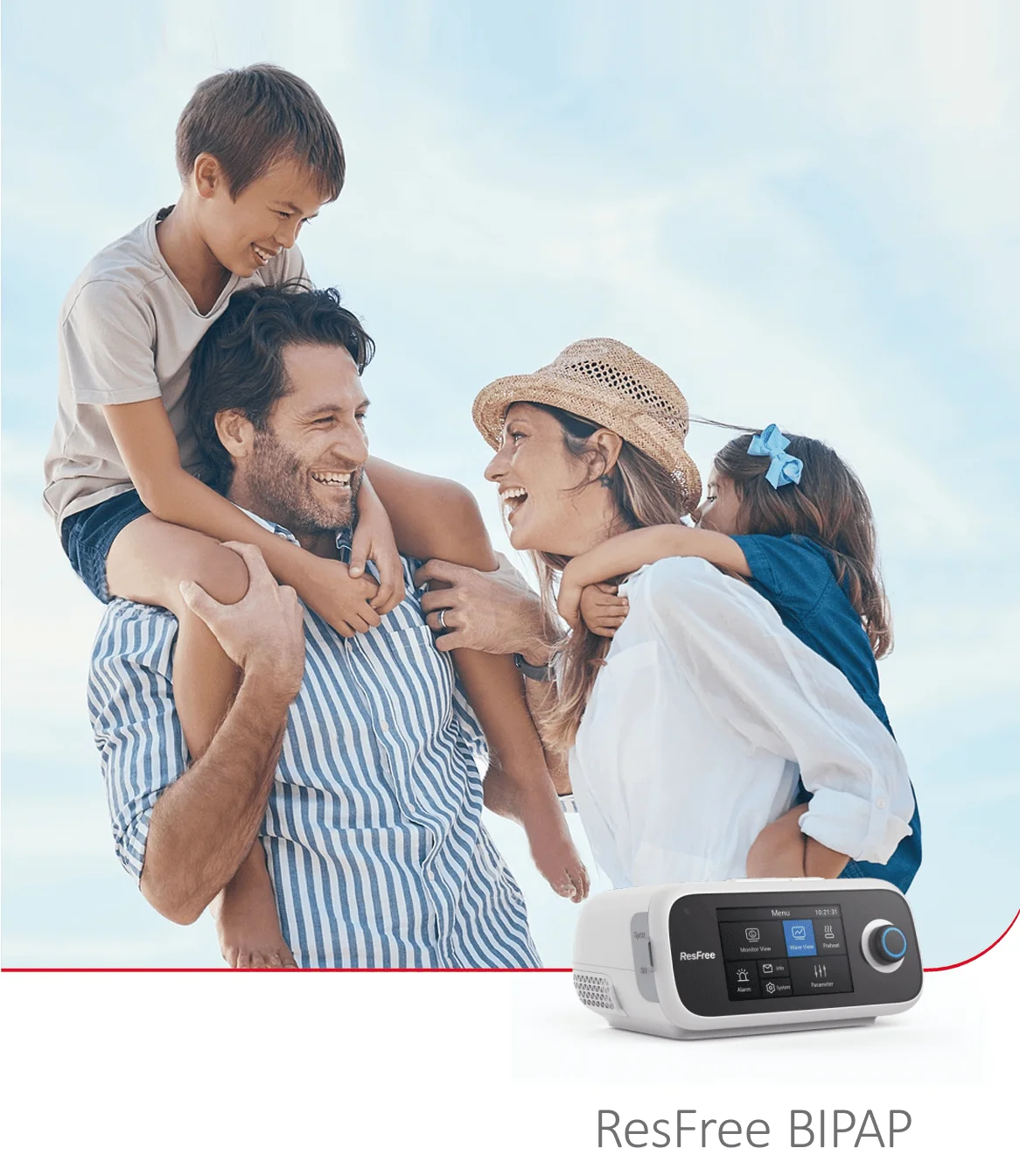
For COPD follow-up, the ResFree BiPAP line from Beyond is most relevant for its timed and volume-assured choices: S/T, APCV, and Volume Assured Function (VAF). CPAP, S, T, and High Flow availability and pressure range must be verified against the chosen model.
VAF can vary pressure toward a preset tidal-volume target, while leak compensation, inspiratory and expiratory sensitivity, and rise-time adjustment help refine patient interaction. Integrated humidification, optional heated tubing, mask-fit detection, and low-noise operation address practical barriers that frequently shorten nightly use.
Optional SpO₂ recording and Wi-Fi or 4G transfer from Beyond support cloud tools that generate compliance reports and trend charts. These functions can help authorized clinical teams review changes in usage, leakage, and respiratory trends between scheduled visits.
Remote review must be embedded in a defined service: someone needs responsibility for checking alerts, contacting the patient, documenting decisions, and escalating urgent symptoms. Technology has limited value when data accumulate without action. Paired with rapid troubleshooting and explicit reassessment thresholds, remote monitoring can help support continuity of care after hospitalization.
Trend-review rules should distinguish routine coaching from urgent clinical escalation and specify how quickly each category is handled, ensuring that remote observation leads to consistent action across weekends, holidays, and staff changes. Escalation ownership must remain visible when several organizations share the service.
The Outcome Depends on a Complete COPD Pathway
Lower readmission rates become plausible only when ventilation sits inside a complete transition plan. Before discharge, the team should confirm clinical stability, reconcile inhaled therapy, assess oxygen needs, teach mask and equipment care, and provide a written exacerbation response.
Early follow-up can address discomfort, claustrophobia, dryness, pressure intolerance, and leakage before the patient abandons therapy. Pulmonary rehabilitation, physical activity, nutrition, vaccination, and smoking cessation remain central because ventilatory support does not treat every driver of COPD decline.
Caregivers should recognize warning signs such as increasing somnolence, confusion, fever, chest pain, severe breathlessness, or sustained desaturation and know whom to contact. Periodic review should ask whether the original indication still applies and whether settings remain effective after weight change, medication adjustment, or another illness.
The machine can support ventilation each night, but durable outcomes come from adherence, competent service, and coordinated clinical decisions. Claims about substantially fewer hospitalizations should therefore be tied to defined patient groups and measured outcomes, preserving a rigorous connection between product capability and real-world benefit.
Programs can evaluate their own effectiveness through adherence, gas-exchange response, patient experience, exacerbation frequency, emergency visits, and readmissions, while comparing results with an appropriately defined population rather than relying on isolated success stories. Transparent measurement supports improvement without turning association into causation.