

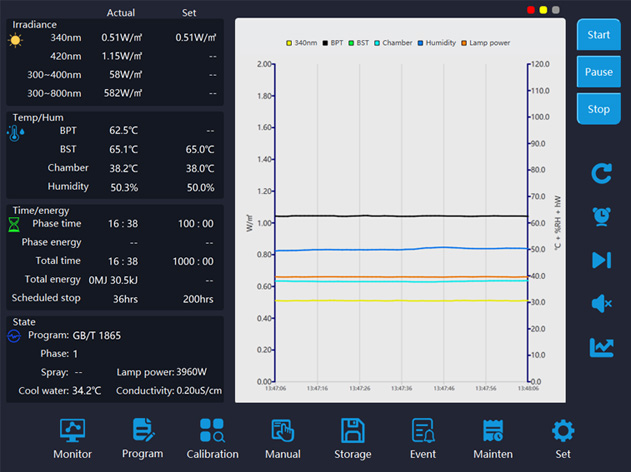
Weathering tests are intended to reveal how materials respond to controlled environmental stresses, but their value depends on how closely test conditions match the question being studied. Light source, temperature, moisture, exposure time, specimen preparation, and evaluation method all shape the outcome. A clear testing strategy helps laboratories connect visible changes with meaningful durability decisions.
Define What “Durability” Means for the Material
Durability can refer to different properties depending on the application. A coating laboratory may track color change, gloss retention, chalking, cracking, or flaking. A plastics team may focus on embrittlement or surface damage, while automotive materials may require resistance evaluation under combinations of light, heat, and moisture.
A weather study should therefore start with a defined performance question rather than with a specific chamber. Once the target failure modes are known, the laboratory can identify the exposure conditions and measurements that are most relevant.
Link Exposure Conditions to Real Environments
Accelerated weathering uses specimens to control stress in a laboratory rather than waiting for natural exposure to produce visible changes. The results, however, need to be interpreted in relation to the selected exposure conditions.
Light intensity, spectral distribution, temperature, relative humidity, condensation, and water spray can all affect degradation. Changing one variable can alter the stress applied to the specimen and influence the outcome.
A useful test record should identify the light source, irradiance setting, temperature, humidity or moisture condition, cycle sequence, and exposure duration. These details provide context when results from different materials or testing periods are compared.
Select the Right Weathering Equipment
There is no single exposure system for every durability question. UV-based systems are commonly used when ultraviolet exposure is a key concern, while xenon systems can provide a broader solar-spectrum simulation. Depending on the application, a laboratory may also require controlled temperature, humidity, or water exposure.
The weathering chamber selected for a program should be matched to the material, test method, and capacity requirements. BIUGED INSTRUMENTS offers weathering equipment covering UV and xenon testing, allowing laboratories to consider different exposure approaches for coatings, plastics, inks, and other materials.
Equipment configuration also matters. Programmable cycles and controlled environmental conditions can help reduce variation between runs. For laboratories comparing multiple formulations or batches, repeatable exposure settings make the resulting data more meaningful.
Treat Specimen Preparation as Part of the Test
Even a well-controlled chamber cannot correct inconsistent specimen preparation. Coating thickness, substrate type, curing conditions, sample dimensions, conditioning time, and surface preparation can influence how a material responds to exposure.
Laboratories should establish a standardized specimen preparation procedure before running a durability study. Samples should use the same application technique and reach the same conditioning state. Replicate specimens can also help distinguish genuine material responses from random variation.
This is especially important when comparing suppliers or formulations. A difference in coating thickness, for example, may change apparent weathering performance even when the formulations are otherwise comparable.
Measure Changes at Defined Intervals
A final visual inspection can show that degradation occurred, but it may provide limited information about when or how the change developed. Measuring specimens at defined intervals creates a more useful degradation profile.
Depending on the product, laboratories may monitor color, gloss, cracking, chalking, adhesion, surface appearance, or other relevant properties. Recording observations at multiple stages shows whether degradation develops gradually or accelerates after a particular exposure period.
This time-based approach can support formulation development. Two samples may appear similar early in the test but show different rates of change later. Intermediate measurements can reveal those differences before they become significant in the field.
Keep Test Conditions Traceable
Comparable durability data requires more than a controlled exposure cycle. The laboratory should preserve records of sample identification, preparation conditions, equipment settings, calibration status, exposure duration, and evaluation method.
When a result is unexpected, these records help determine whether the change is related to the material or to the testing process. Equipment supplied by BIUGED INSTRUMENTS can be incorporated into a documented workflow where exposure settings and test conditions need to remain consistent across repeated studies.
For organizations operating several laboratories, standardized procedures and documented equipment settings also make cross-site comparison easier. The objective is not to eliminate all material variation, but to reduce avoidable testing variation so genuine differences are easier to identify.
Use Weathering Results in Product Development
Weathering data has practical value when it can support a specific decision. A formulation team may use results to compare stabilizers or coating systems. Quality control may use exposure data to monitor consistency between production batches, while automotive materials teams may use accelerated aging results when screening exterior components.
The most useful programs define acceptance criteria before testing begins. This prevents the laboratory from collecting large amounts of exposure data without knowing how the results will influence material selection or process decisions.
Turning Exposure Tests into Better Decisions
A weather study becomes more informative when every part of the test connects to the durability question. Choosing an appropriate exposure system, controlling specimen preparation, measuring degradation at defined intervals, and preserving traceable records all contribute to more useful results.
With experience across weathering and other material testing applications, BIUGED INSTRUMENTS combines controlled testing equipment with a standards-oriented approach to help users build consistent exposure and evaluation procedures. Visit the company’s website to explore suitable solutions or discuss a specific testing requirement.