

Industrial facilities that handle flammable gases, vapors, or combustible dust need electrical equipment suited to their operating conditions. Choosing the right equipment involves more than comparing prices. Buyers must consider hazardous area classifications, environmental exposure, installation requirements, and maintenance access before placing an order.
For distributors, engineering contractors, and industrial procurement teams, a clear evaluation process helps reduce specification errors and project delays. Lighting performance, enclosure materials, protection ratings, and certification documents all affect purchasing decisions. Reviewing these factors early also helps project teams compare quotations on a consistent technical basis.
Identify the Risks at the Installation Site
Hazardous areas differ in the substances present and the likelihood of their release. A chemical processing room may have different risks from a gas handling platform or a fuel storage facility. Buyers should obtain the site’s hazardous area classification before comparing equipment models or requesting quotations.
Temperature, humidity, corrosion, and dust exposure also influence equipment selection. Outdoor installations may face rain and changing weather, while chemical plants can expose enclosures to corrosive substances. These conditions affect material choices, sealing requirements, and maintenance planning. Site assessments should identify such factors before suppliers recommend suitable equipment.
Project drawings provide a practical starting point. Procurement teams should confirm mounting positions, supply voltage, cable entry requirements, and available installation space. Early coordination between engineers, contractors, and suppliers can reduce redesign work and prevent incompatible components from reaching the installation stage.
Check Certification and Protection Ratings
Certification documents should match the intended application and the exact product configuration. Buyers comparing explosion proof products should review the applicable hazardous area classification, protection concept, gas or dust group, and temperature class where relevant. Requirements vary by jurisdiction, so certification must be checked against the project specification.
Ingress protection ratings describe resistance to solid objects and water under specified test conditions. They do not replace explosion protection certification. A high IP rating may be useful in wet or dusty environments, but buyers should also examine permitted operating temperatures, enclosure materials, and installation instructions.
International projects may require specific certification schemes or local approvals. Procurement teams should request valid certificates, product datasheets, and installation manuals before completing technical evaluations. They should verify that the documents cover the proposed model and its accessories. This process helps teams assess equipment against project requirements rather than general marketing claims.
Evaluate Lighting Performance and Maintenance
Lighting selection affects visibility, inspection work, and routine maintenance in industrial facilities. Buyers should assess required illumination, mounting height, beam distribution, operating hours, and maintenance access. Production areas, walkways, equipment rooms, and emergency escape routes may need different lighting arrangements.
When comparing explosion proof lighting manufacturers, B2B buyers should examine product documentation, available lamp powers, enclosure construction, and service requirements. They should also ask about replacement components, warranty terms, delivery lead times, and technical support. These details help distributors and contractors evaluate long-term practicality alongside initial purchase cost.
Maintenance procedures also deserve attention before installation. Facilities should understand how equipment can be isolated, opened, inspected, and serviced according to the manufacturer’s instructions. Interlocking mechanisms can provide an additional protective measure when an enclosure is opened. They do not replace electrical isolation or approved maintenance procedures.
Match Equipment Features to Site Conditions
Enclosure materials influence performance in demanding environments. Glass-reinforced polyester (GRP), for example, can be suitable where corrosion resistance and manageable equipment weight are important. Buyers should still verify material properties, temperature limits, chemical compatibility, and mounting requirements against actual site conditions.
Emergency lighting may be necessary where visibility must be maintained during a power interruption. Procurement teams should establish whether emergency operation is required, how long it must operate, and which standards apply. Optional emergency functions provide flexibility, but the selected configuration and its performance data need confirmation before ordering.
Maintenance planning should also influence purchasing decisions. Facilities with limited equipment access may place greater value on component availability, inspection procedures, and service arrangements. Reviewing these factors alongside purchase cost gives procurement teams a more realistic basis for comparing equipment over its expected service life.
Review the BYD703 Series for Industrial Applications
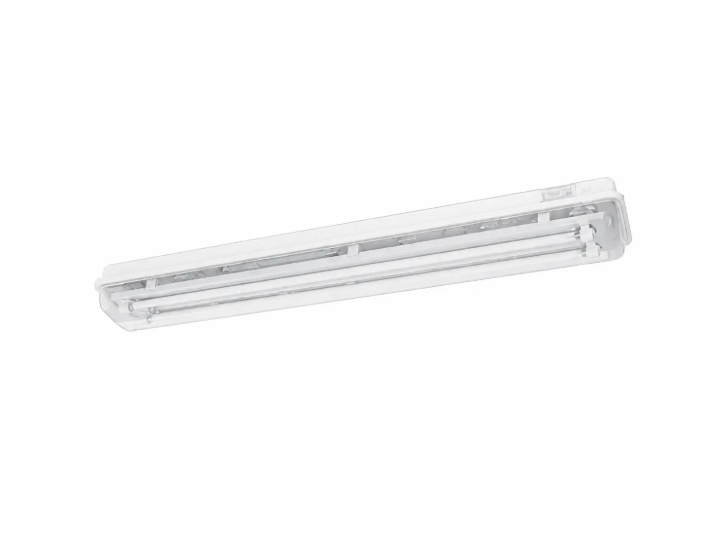
The BYD703 Series Explosion-proof Linear Light is one option for projects requiring linear lighting in demanding environments. Its enclosure is made from GRP, and multiple lamp powers are available. These features allow project teams to assess the product against site conditions and lighting requirements.
The series includes a built-in interlocking mechanism that cuts off power when the cover is opened. It also uses a lamp source from an internationally recognized brand. An emergency lighting function is available as an option, which may suit facilities with specific emergency illumination requirements.
The product is described as having a high IP rating and being suitable for harsh environments, including high temperatures, high humidity, and highly corrosive conditions. Buyers should confirm the exact IP rating, operating temperature range, certification details, and available power options for the chosen configuration. Sunleem EEW offers this product for consideration by industrial buyers, subject to project-specific technical verification.
Compare Suppliers on More Than Price
A low initial quotation does not necessarily mean a lower overall project cost. Buyers should compare equivalent specifications, accessories, documentation, delivery schedules, and after-sales arrangements. Differences in certification, emergency functions, mounting components, and replacement parts can affect the procurement budget.
Clear communication also matters during supplier evaluation. Procurement teams should provide detailed specifications and ask suppliers to identify deviations in their proposals. For larger projects, reviewing samples or arranging a technical clarification meeting may help resolve questions before orders are released.
Sunleem EEW supplies industrial explosion-proof equipment, including lighting products for demanding operating environments. Buyers assessing potential suppliers should review relevant product documents, certification scope, and technical support arrangements. Clear responses to engineering questions can help project teams coordinate purchasing, installation, and maintenance.
Verify Specifications Before Making a Choice
Selecting industrial equipment requires a balanced review of site hazards, certification, environmental protection, lighting requirements, and maintenance needs. A documented comparison helps contractors, distributors, and facility operators explain purchasing decisions and identify specification gaps before procurement moves forward.
Rather than choosing solely by price or a general product description, buyers should verify the exact configuration against project requirements. Comparing explosion proof products through consistent technical criteria makes quotations easier to evaluate. Careful preparation helps B2B teams select equipment suited to the intended application and plan installation and maintenance more effectively.