

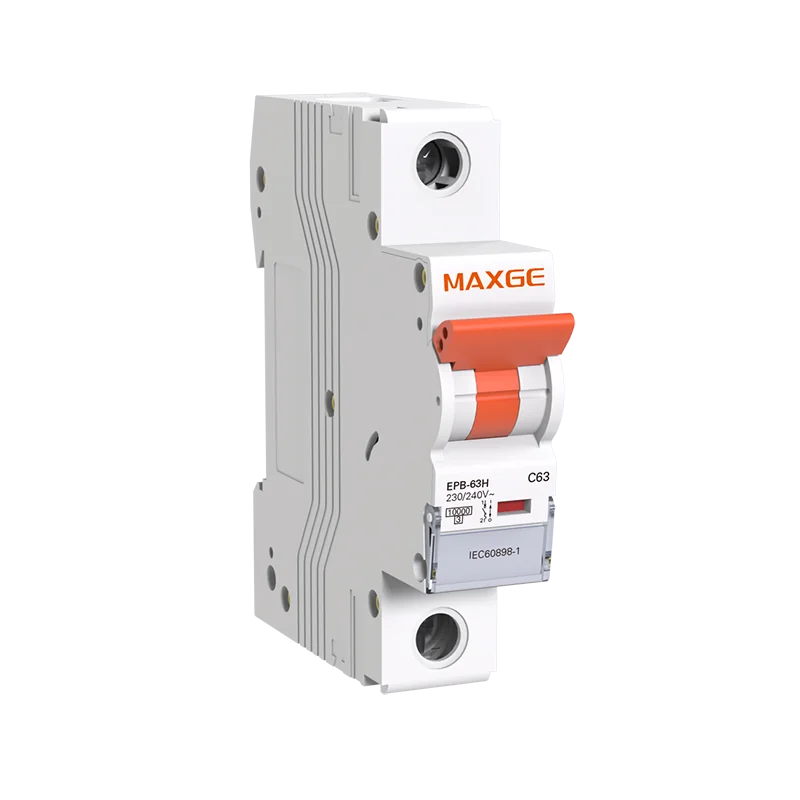
Selecting the right miniature circuit breaker is not simply a matter of choosing the correct current rating. The trip curve also matters because different electrical loads can produce different levels of starting current. A breaker that trips too easily may interrupt normal operation, while one that tolerates excessive inrush may not provide the intended protection.
For professionals selecting electrical control products, understanding B, C, and D trip curves is an important part of circuit protection design. The right choice depends on the load characteristics, expected inrush current, circuit configuration, and applicable installation requirements.
What Do B, C and D Curves Mean?
The B, C, and D designations describe the magnetic instantaneous tripping characteristics of an MCB. In practical terms, they indicate how much short-duration current the breaker can tolerate before its instantaneous protection operates.
A B-curve MCB generally responds to lower levels of instantaneous overcurrent and is commonly considered for circuits with relatively low inrush current. Typical applications include lighting circuits and general resistive loads.
A C-curve MCB allows a higher level of short-term inrush before instantaneous tripping. This makes it suitable for circuits supplying loads such as motors, transformers, and certain commercial equipment where starting current is higher than normal operating current.
A D-curve MCB is designed for applications with particularly high inrush currents. It may be considered for equipment such as larger motors, transformers, or other loads with substantial starting current, provided the installation conditions and fault protection requirements are appropriate.
The important point is that a higher curve is not automatically better. The trip characteristic must correspond to the actual electrical load.
How Should the Trip Curve Match the Load?
The first consideration is the difference between normal operating current and starting or inrush current. A resistive load usually has a relatively stable current profile, so a B-curve device may provide appropriate protection without unnecessary nuisance tripping.
Motor-driven equipment presents a different situation. When a motor starts, its current can temporarily rise significantly above its normal running current. If a B-curve breaker is installed without considering this characteristic, it may trip during normal startup. A C-curve device can provide more tolerance for this temporary current increase.
Loads with exceptionally high inrush may require a D-curve solution. However, selecting D simply because a machine has a motor is not sufficient. The actual starting characteristics, cable impedance, prospective short-circuit current, and required disconnection time should all be evaluated.
This approach is particularly important when selecting electrical control products for panels containing multiple circuits. Each branch circuit should be evaluated according to its own load rather than applying the same trip curve throughout the installation.
Does the Current Rating Change the Selection?
Yes, but the current rating and trip curve address different aspects of protection.
For example, a miniature circuit breaker 20 amp rating indicates the nominal current level for which the device is selected, while the B, C, or D curve describes its instantaneous tripping behavior. A 20 A breaker therefore cannot be selected correctly by looking at the “20 A” value alone.
The same principle applies to a 32 amp miniature circuit breaker. Its 32 A rating must be coordinated with the conductor capacity and expected load current, while its trip curve should reflect the characteristics of the connected equipment.
This distinction helps prevent a common selection mistake: increasing the breaker rating or choosing a slower trip curve simply to prevent nuisance tripping. If a breaker trips during normal operation, the cause should first be investigated rather than automatically choosing a device with less sensitive protection.
When Is a 3-Phase MCB Appropriate?
Three-phase systems introduce additional considerations because the breaker must protect multiple live conductors and work correctly with the characteristics of the connected equipment.
A 3-phase miniature circuit breaker is commonly used for three-phase distribution and equipment circuits. When selecting one, professionals should consider the system voltage, number of poles, rated current, trip curve, short-circuit capacity, and coordination with upstream and downstream protective devices.
For three-phase motors, for example, the starting current can influence whether a B, C, or D curve is appropriate. The breaker should also be coordinated with other motor protection components where applicable. The goal is to ensure that the circuit can start and operate normally while still providing effective protection under abnormal conditions.
What Else Should Be Checked Before Selecting an MCB?
Trip curve selection is only one part of the process. Professionals should also check rated voltage, breaking capacity, pole configuration, conductor sizing, installation environment, and relevant product standards.
Coordination is equally important. An MCB should work as part of the overall protection system rather than being selected independently. If several protective devices are installed in the same distribution system, their characteristics should be reviewed to reduce unnecessary interruption and support appropriate fault isolation.
Product documentation is also essential. Technical specifications, dimensional information, terminal capacity, electrical characteristics, and installation instructions should be verified before final selection.
Choosing Electrical Control Products for Different Applications
A practical selection process starts with the load rather than the breaker itself. Identify the equipment type, determine its normal operating current, understand its starting or inrush behavior, and then select an appropriate current rating and trip curve.
MAXGE provides a range of electrical control products for different circuit protection and electrical distribution requirements. By reviewing the technical specifications and application requirements of each product, professionals can make a more informed selection for specific installations.
Making MCB Selection More Precise
Choosing between B, C, and D curves involves considering both the expected starting current of the load and the required level of circuit protection. B-curve devices are commonly considered for circuits with relatively low inrush currents, while C-curve protection can accommodate many general-purpose loads with moderate starting currents. D-curve devices may be considered for applications where substantially higher inrush currents are expected.
The trip curve should not be evaluated in isolation. Rated current, breaking capacity, load characteristics, system configuration, and installation conditions can all affect the suitability of a particular MCB. MAXGE develops low-voltage protection and control products for a range of electrical applications, with its product portfolio also extending to PV, renewable energy, energy storage, and EV charging systems.
MAXGE’s product development is supported by an R&D team, patented technologies, software copyrights, CNAS-related laboratory capabilities, and international certifications. Through its MAXGE, EMA, and GEBLER brands, the company serves customers in more than 60 countries and works with over 80 distribution partners. For product information, technical specifications, or application support, you can contact MAXGE through its official website.