

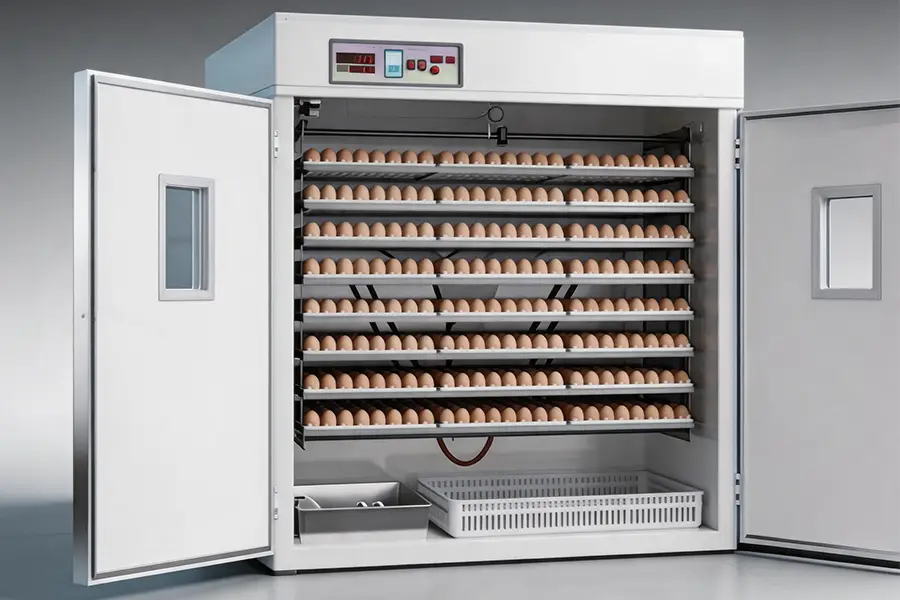
Reliable temperature control is one of the most important design considerations for commercial and professional incubation equipment. Whether an incubator is developed for poultry production, breeding programs, research, or specialized agricultural applications, the heating system must deliver consistent thermal conditions without creating unnecessary energy consumption or complicated maintenance requirements.
For equipment manufacturers, selecting the right heating component is therefore more than a matter of choosing a suitable wattage. Air circulation, available installation space, electrical requirements, control strategy, and the incubator’s operating environment all influence the final design. Working directly with a heating-element manufacturer can make it easier to align these factors from the beginning.
Why Temperature Stability Matters in Incubation Systems
An incubation temperature control system needs to maintain a stable environment throughout the incubation cycle. Excessive temperature variation can create inconsistent conditions inside the chamber, making accurate thermal management more difficult for operators and potentially affecting hatching performance.
The heating element is only one part of the overall system, but it has a direct influence on how quickly the chamber responds when heat is required. A suitable design should work effectively with temperature sensors, controllers, fans, insulation, and airflow paths rather than functioning as an isolated component.
For business equipment developers, this means the heating solution should be evaluated according to the complete incubator architecture. A component that works well in one chamber may not deliver the same results when chamber volume, airflow, installation position, or control logic changes.
PTC Technology for More Consistent Heating
PTC heating technology is particularly suitable for applications where controlled and stable heating is important. PTC elements have a positive temperature coefficient, meaning their electrical resistance increases as their temperature rises. This characteristic allows the heating output to adjust naturally as the operating temperature changes.
Such self-regulating behavior can help reduce overheating risk and support more stable heating performance. It can also simplify thermal management compared with systems that depend entirely on conventional resistive heating and external switching.
For an egg incubator heating element, another consideration is heat distribution. Air-heating configurations can work together with circulation fans to distribute warm air through the chamber. Proper positioning and airflow design remain essential, because even a suitable heater cannot compensate for poorly designed air circulation.
Why Customization Matters for Specialized Incubator Designs
Standard heating components may be sufficient for general-purpose incubators, but specialized equipment often has different requirements. Cabinet dimensions, available mounting space, electrical architecture, target heating capacity, and airflow characteristics can vary significantly between models.
Direct manufacturer collaboration allows these requirements to be considered before production. Engineers can discuss voltage, wattage, dimensions, mounting arrangements, and other parameters instead of adapting the entire incubator around an off-the-shelf component.
This approach can be especially valuable for OEM equipment developers managing several incubator models. A configurable heating platform can potentially reduce redesign work while allowing different products to use heating elements matched to their individual requirements.
What Buyers Should Evaluate Before Selecting a Heating Element
Technical specifications should be reviewed alongside the intended operating environment. Voltage and wattage are obvious starting points, but physical dimensions are equally important when the heater must fit into a compact chamber.
Buyers should also examine how the heating element interacts with the incubator’s airflow system. Air velocity, fan placement, heater location, insulation, and sensor position can all affect the actual temperature experienced inside the chamber.
Another important consideration is long-term reliability. For commercial incubation equipment, frequent component replacement can increase maintenance costs and interrupt production. PTC heaters are commonly valued for self-regulating operation and long-term heating applications, making them worth considering where stable and continuous performance is required.
Advantages of Direct Manufacturer Collaboration
Purchasing directly from a manufacturer can provide more technical interaction than simply selecting a component from a general catalog. When the supplier understands the equipment’s application, engineers can discuss whether a particular heating structure is suitable for the available space and operating conditions.
The development process can also become more structured. A typical custom PTC heater workflow may include requirement confirmation, technical design and quotation, sample production, testing, mass production, quality control, and final inspection. This provides equipment manufacturers with defined checkpoints before committing to larger production volumes.
For customized projects, sampling is particularly useful. A prototype can be evaluated inside the actual incubator before the heating component is finalized. This allows the development team to identify issues involving temperature distribution, installation, wiring, airflow, or control response at an earlier stage.
Supporting Efficiency Without Complicating the System
Energy efficiency is another consideration for commercial incubator manufacturers. Heating systems operate repeatedly throughout an incubation cycle, so unnecessary power consumption can increase operating costs over time.
PTC technology can support efficient operation through its self-regulating characteristics. As the element becomes hotter, its resistance increases, naturally influencing power consumption. This can help reduce excessive heating and complement the incubator’s temperature-control strategy.
However, energy performance should always be considered at the system level. Insulation quality, chamber sealing, fan efficiency, ambient temperature, control settings, and heating capacity all influence actual energy consumption. Selecting a heater based solely on its nominal wattage is therefore unlikely to produce the best engineering result.
A Practical Approach to OEM Incubator Development
For business buyers, the most effective process is to define the application requirements before selecting the heating component. Important information can include chamber dimensions, supply voltage, desired heating capacity, airflow conditions, installation limitations, operating schedule, and expected production volume.
The heating supplier can then use these requirements to determine whether a standard model is appropriate or whether customization is necessary. This application-driven approach reduces the risk of choosing a component that technically works but requires costly modifications elsewhere in the equipment.
A More Integrated Heating Solution for Incubator Manufacturers
PTCYIDU provides PTC heating solutions for OEM applications and offers conductive PTC air heaters among its product range. Its conductive PTC heating element designed for egg incubator applications is specified at 220V and 100W, with a 92 × 31 × 25 mm size. The broader product specification supports rated voltages from 12–220V and rated power from 50–200W, while custom voltage and wattage configurations are available.
The manufacturer, PTCYIDU, states that it develops and manufactures PTC heating elements and related heater modules for OEM customers. Its product portfolio includes conductive and insulated PTC air heaters, fan heaters, aluminum shell heaters, flexible film heaters, and other heating solutions. The company also describes a customization process covering design, sampling, testing, mass production, and quality control.
For incubator manufacturers developing specialized equipment, this direct-development model can provide a practical route toward more precisely matched heating components. Rather than treating the heater as a generic purchased part, buyers can evaluate it as an integrated element of the incubation temperature control system, supporting stable conditions, efficient operation, and more dependable equipment development.