

Chlorine gas is widely used in water treatment, chemical processing, pulp and paper production, and other industrial applications. However, a leak can quickly create a serious workplace hazard. Effective chlorine gas monitoring helps safety teams identify abnormal concentrations early and take appropriate action before exposure becomes severe.
For facilities that handle chlorine cylinders, storage systems, dosing equipment, or process lines, monitoring should be treated as part of a broader gas safety strategy. Selecting an appropriate Gas Detector, establishing alarm procedures, and maintaining equipment correctly can help create a more controlled working environment.
Why Chlorine Gas Monitoring Matters
Chlorine is a greenish-yellow gas with a pungent, irritating odor. It is nonflammable but acts as a strong oxidizer. Because chlorine can irritate the respiratory system, uncontrolled releases can present significant risks to workers in affected areas.
Concentration matters when evaluating the severity of a potential release. NIOSH lists a recommended exposure limit of 0.5 ppm as a 15-minute ceiling and an IDLH concentration of 10 ppm. OSHA lists a 1 ppm ceiling for general industry. These values demonstrate why reliable detection at relatively low concentrations is important.
A worker should not have to rely on odor recognition to determine whether an area is safe. Monitoring equipment provides an objective measurement that can support workplace procedures, emergency response, and exposure-control programs.
Where Should a Gas Detector Be Used?
The right monitoring arrangement depends on the facility layout, chlorine sources, ventilation, and work activities. Potential monitoring locations may include chlorine storage rooms, chemical dosing areas, process equipment, pipelines, valve stations, and other areas where a release could occur.
Portable detection is particularly useful when employees move between different areas or perform inspection and maintenance work. A portable Gas Detector can travel with the worker and provide continuous readings during tasks where conditions may change.
Fixed detectors can also be appropriate where a particular location requires continuous unattended monitoring. In many industrial environments, portable and fixed systems serve different purposes rather than replacing one another.
Choosing a Portable Gas Detector for Chlorine
A portable detector intended for chlorine monitoring should be selected according to the actual gas, required measurement range, sensor technology, operating environment, alarm requirements, and applicable workplace procedures.
Sensor compatibility is especially important. A detector should be configured for the target gas rather than selected simply because it is marketed as a general-purpose instrument. The required chlorine measurement range should also correspond to the facility’s risk assessment and monitoring objectives.
Alarm functions are another important consideration. Audible, visual, and vibration alarms can provide different forms of notification when a measured concentration reaches a configured threshold. This can be valuable in noisy industrial environments or situations where workers may not continuously look at the display.
Portable Detection for Industrial Work
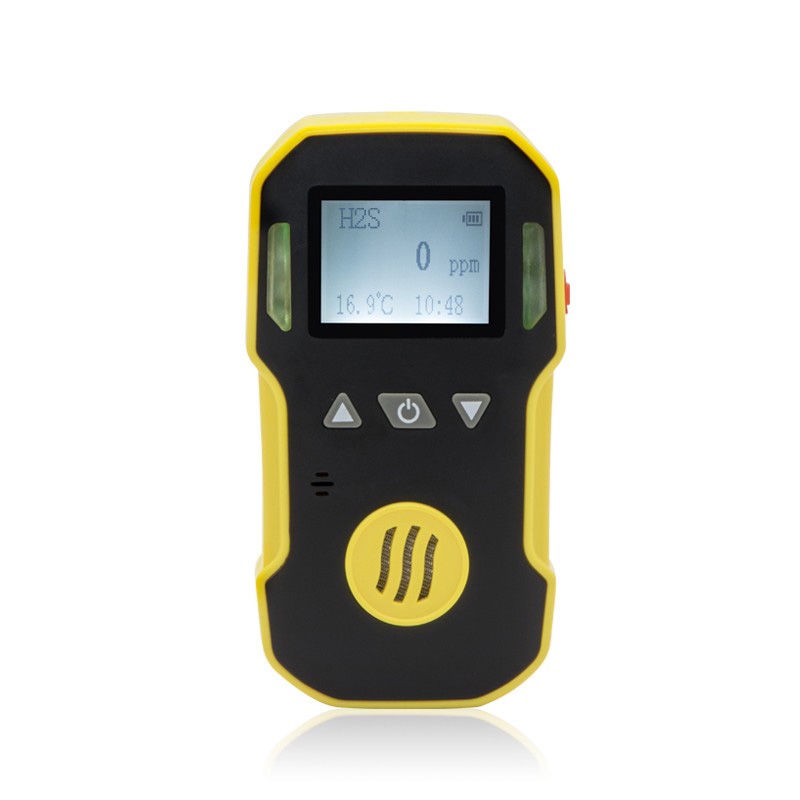
Bosean‘s portable gas detector range includes single-gas and multi-gas instruments designed for industrial gas detection applications. Its BH-90A portable single gas detector, for example, can be configured for toxic gases, with chlorine among the types of toxic-gas applications that can be specified in advance. The manufacturer states that the instrument uses natural-diffusion sampling and an embedded MCU controller.
The BH-90A has a stated accuracy of no more than ±5% F.S. and a response time of less than 30 seconds. Its specifications list an LCD display, LED, sound and vibration alarms, a continuous working time of at least eight hours, and a sensor life of two years. For toxic-gas operation, the specified operating temperature is -20°C to 50°C.
The detector also has an explosion-proof housing, with the product page specifying Ex ib IIB T3 Gb. Its stated dimensions are 100 mm × 60 mm × 30 mm, while the weight is approximately 130 g including the battery but excluding accessories. These specifications should be checked against the exact configuration required for a particular chlorine application.
Building a Better Chlorine Monitoring Program
A detector is only one part of an effective monitoring program. Facilities should establish clear procedures for calibration, functional checks, alarm response, maintenance, and worker training. Monitoring locations should also be reviewed when equipment, processes, ventilation, or chemical storage arrangements change.
Calibration is particularly important because sensor performance can change over time. Workers should understand what an alarm means and which actions are required when chlorine concentrations rise. Emergency procedures should be established before an incident occurs rather than developed during a release.
For applications requiring specialized configurations, buyers should also confirm the target gas, expected concentration range, environmental conditions, required certifications, and sampling method before ordering. These details help ensure that the selected equipment matches the actual operating conditions.
A Practical Approach to Worker Protection
Chlorine gas monitoring should combine suitable detection equipment with sound operational controls. Engineering measures, ventilation, safe handling procedures, maintenance practices, personal protective equipment, emergency planning, and worker training can work together to reduce exposure risks.
A portable detector is especially useful when employees need protection while moving through different work areas. It can provide workers with immediate information about the surrounding atmosphere and support faster recognition of changing conditions.
Organizations evaluating portable detection equipment can Contact Us to discuss application requirements and detector configurations. Providing information about the target gas, working environment, expected concentration, and intended use can help suppliers recommend a more suitable solution.
About Bosean
Bosean Technology specializes in industrial safety, environmental monitoring, and professional measurement. With gas detectors, radiation detectors, sensors, and related solutions as core products, the company serves applications including smart mines, smart gas, energy storage safety, and environmental protection. With certifications including explosion protection, SIL, and IECEx, Bosean is committed to providing precise, reliable detection solutions for professional users worldwide.
For chlorine monitoring requirements, Contact Us to discuss your application and find a suitable Gas Detector solution.