

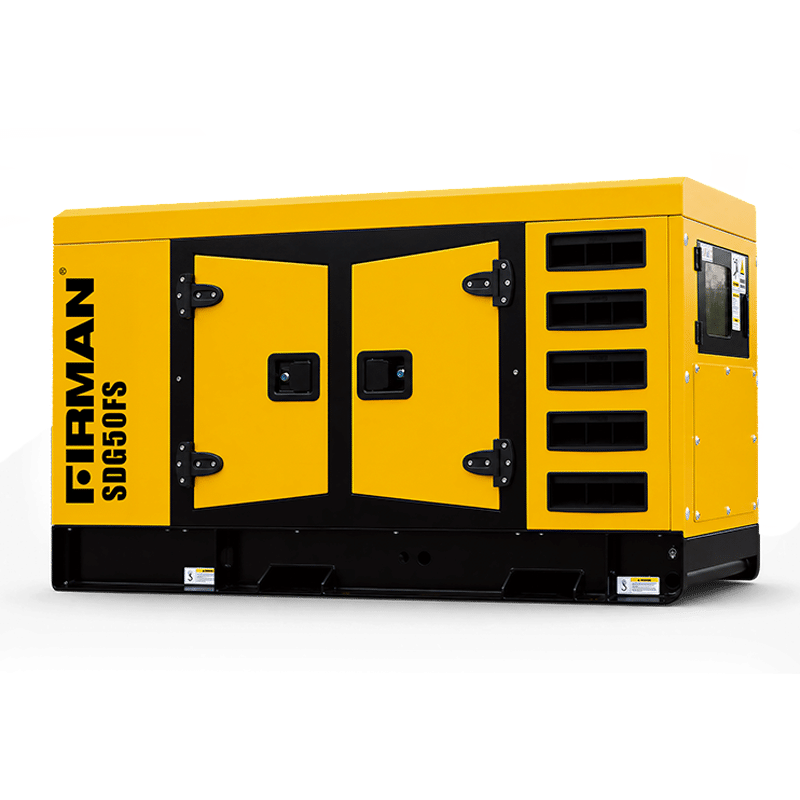
Construction sites, agricultural operations, and infrastructure projects often require temporary power around dust, moisture, heat, and changing weather. Diesel generators can provide practical field power, but reliability depends on protecting the engine, fuel system, electrical components, and frame from environmental stress.
Why Harsh Environments Demand More Attention
Outdoor generators face conditions that accelerate wear. Dust can restrict airflow through the air filter and cooling system, while moisture can promote corrosion and create electrical risks. Poor-quality or contaminated diesel can also introduce water and sediment into the fuel system.
Maintenance intervals should reflect actual working conditions rather than relying only on a standard calendar. Fuel filters may need to be drained of water and sediment more frequently when fuel quality is poor or condensation is unavoidable. Standard maintenance guidelines also emphasize routinely checking oil filter, coolant, air cleaners, batteries, and fuel systems.
Inspect Before Every Deployment
A pre-use inspection can reduce downtime. Operators should look for loose or damaged components, fuel or oil leaks, damaged cables, blocked air inlets, and visible corrosion. The generator should be positioned on stable ground with sufficient clearance for ventilation and exhaust.
FIRMAN’s support guidance recommends checking for loose or missing parts and damage before starting a generator. Its product FAQ also states that generators can be used in various weather conditions and temperatures, but should be protected against short circuits and rusting. Generators should never be operated indoors.
Keep Airflow and Cooling Paths Clean
Dusty construction areas can quickly load an air filter with fine particles. A restricted filter reduces clean air available to the engine and can affect performance. Cooling surfaces also need attention because accumulated dirt can reduce effective heat transfer.
A regular inspection should cover the air cleaner, cooling openings, radiator area where applicable, and surrounding frame. The U.S. Department of Energy includes checking the air cleaner and cleaning it when required in generator maintenance guidance. In particularly dusty applications, inspections should be more frequent.
Control Fuel and Water Contamination
Diesel quality becomes a major maintenance consideration when mobile generators operate in remote locations. Fuel tanks and filters can collect water and sediment, especially when temperature changes encourage condensation. Water contamination can interfere with reliable engine operation and cause fuel-system problems.
Operators should use clean, appropriate fuel and inspect the fuel system regularly. Water separators or fuel-filter bowls should be drained according to the power equipment manufacturers’ instructions. Technical guidelines also recommend adjusting drainage frequency when fuel quality or operating conditions increase the risk of water and sediment accumulation. Additionally, fuel containers should be kept clean, tightly closed, and protected from moisture.
Protect Oil, Battery, and Electrical Components
Engine oil should be checked at the intervals specified for the particular generator and operating conditions. Oil that is dirty, degraded, or at an incorrect level can increase engine wear.
Electrical connections should be kept clean and secure, with damaged insulation or loose cables addressed before operation. Outdoor exposure also makes corrosion control important. A generator should be sheltered appropriately when not operating, while following the power equipment manufacturer‘s storage requirements.
Use a Defined Service Schedule
A maintenance schedule should combine operating hours with environmental conditions. The U.S. Department of Energy’s generator guidance lists routine checks for oil, coolant, fuel, air cleaners, batteries, and exhaust components, with intervals ranging from daily or weekly checks to longer-term inspections.
For commercial users, documenting operating hours, filter changes, oil service, repairs, and unusual conditions can help identify recurring problems. If a generator is subjected to heavy dust, high temperatures, frequent transport, or contaminated fuel, inspection frequency should be adjusted rather than treating a standard interval as universal.
FIRMAN Diesel Generators for Field Applications
FIRMAN’s power machinery portfolio includes petrol generators, diesel generators, welder generators, construction machinery, and water pumps. Its diesel generator range includes SDG Series models in open-frame and soundproof configurations, with mobile features such as electric starting, batteries, and wheels on several models.
The SDW180E is an example for applications that combine portable power with welding requirements. FIRMAN lists it as a diesel welding machine with electric start, battery, and wheels. It has 4.5 kW starting watts, 4.0 kW running watts, 180A welding current, with a 12.5 L fuel tank, 1.65 L oil capacity, and an 84 dB noise level at 7 m. The model uses an SDE186FA engine and an open-frame design.
The SDG range also offers larger diesel generator options. For example, the SDG5500CLE is rated at 5.0 kVA starting and 4.5 kVA running power in an open frame air cooled type, while the soundproof SDG50FS is rated at 55 kVA standby and 50kVA prime power, water-cooled. Exact operating requirements should determine model selection. For now the single unit output of FIRMAN diesel generator is 3000KW, and can achieve higher power requirements by paralleling multiple sets.
FIRMAN offers several generator configurations for commercial users, supported by product information and service resources. For businesses purchasing diesel generators, the best approach is to combine accurate product selection with a documented maintenance plan tailored to the actual environment. That combination can help reduce avoidable downtime and protect the long-term value of power equipment.