

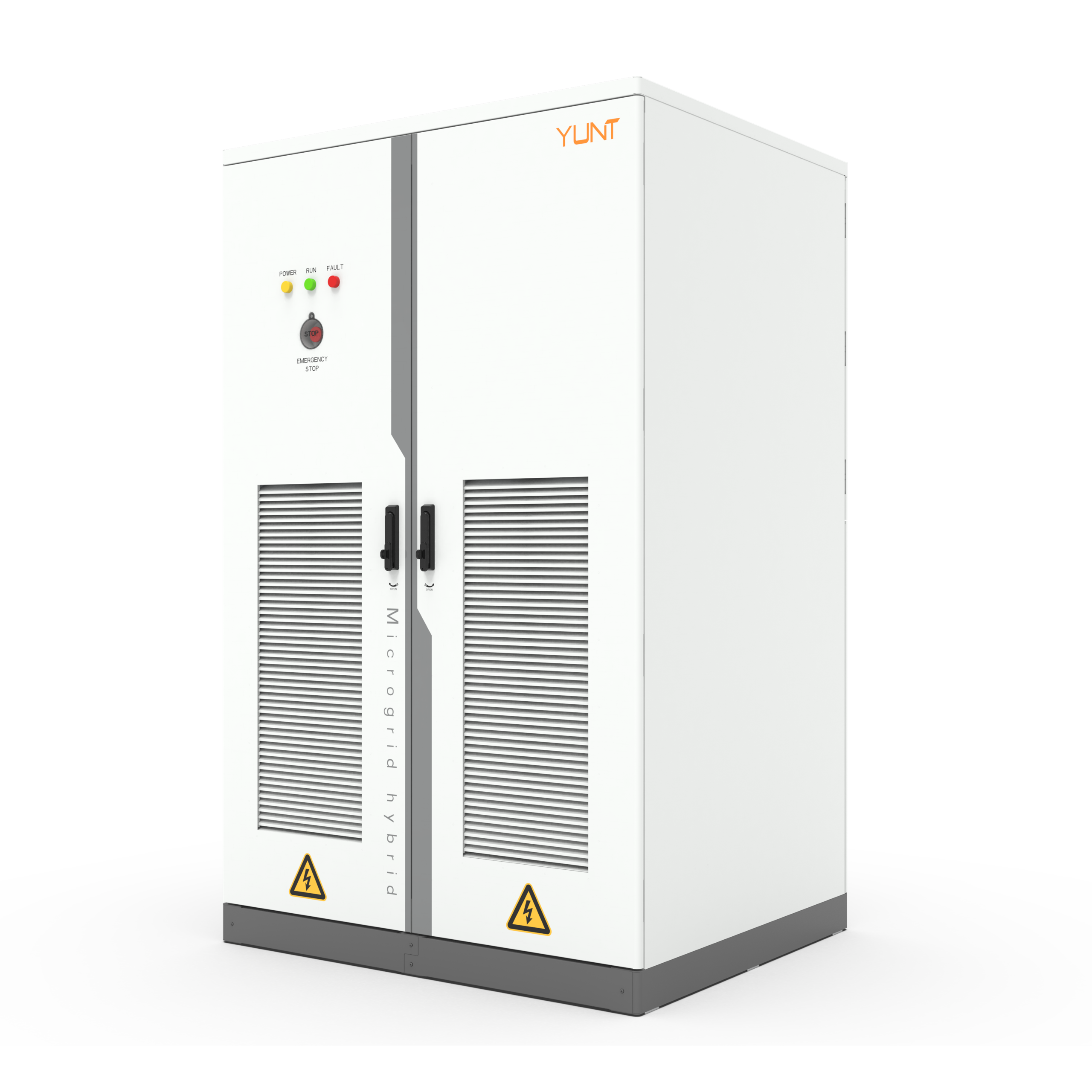
Modern photovoltaic and energy storage systems increasingly rely on bidirectional power management to balance generation, consumption, and storage in real time. In this context, YUNT develops system-level solutions built around the hybrid inverter, designed to coordinate energy exchange between solar arrays, batteries, and the grid in commercial and industrial environments. Often referred to as a hybrid PV inverter in practical applications, this type of system supports both photovoltaic conversion and storage integration within a unified architecture. Rather than following a single-direction energy path, it enables controlled power flow based on load demand and operating conditions, which is especially important in C&I scenarios with variable loads and higher stability requirements. This approach helps improve energy utilization while maintaining stable interaction between DC and AC systems, making it suitable for distributed energy projects where coordinated control and system reliability are critical.
Bidirectional Energy Control in Modern Systems
Bidirectional energy control refers to the ability of a system to manage electricity flowing both into and out of battery storage units. Within this framework, the hybrid inverter plays a central role by converting DC from solar panels or batteries into AC for consumption, while also enabling reverse conversion when excess energy needs to be stored. YUNT designs their control logic around real-time load monitoring and grid interaction signals, allowing energy routing decisions to be adjusted dynamically. This ensures that energy generated during peak sunlight hours can be stored efficiently and later discharged when demand increases. The control strategy also supports grid support functions such as peak shaving and load shifting, which are increasingly relevant in distributed energy environments. By coordinating these processes, the system reduces unnecessary conversion losses and improves overall operational consistency across different usage conditions.
Operational Role of Hybrid Inverter Architecture
From an architectural perspective, hybrid systems integrate photovoltaic input, battery storage, and grid connection within a unified power conversion framework. The hybrid PV inverter enables this integration by managing multiple energy sources simultaneously and determining the optimal direction of power flow. In YUNT’s approach, the control structure is designed to prioritize self-consumption when solar generation is available, while maintaining seamless a transition to storage or grid export when required. This reduces reliance on manual switching or external control devices. The system also supports modular expansion, allowing additional storage capacity or PV arrays to be integrated without redesigning the core power electronics. Thermal management and voltage adaptation are also considered within the design, ensuring stable operation across varying environmental conditions and load profiles. Such architectural flexibility is particularly relevant for commercial installations where energy demand patterns can fluctuate significantly throughout the day.
Enabling Smarter Energy Flow in Solar-Plus-Storage Systems
In summary, bidirectional power flow management has become a fundamental requirement in modern solar-plus-storage systems. Through coordinated conversion and control, systems developed by YUNT demonstrate how energy can be balanced efficiently between generation, storage, and consumption. The role of control-oriented power electronics ensures that energy is not only converted but also intelligently distributed according to real-time conditions. This reduces operational inefficiencies and supports more stable system behavior under varying environmental and load conditions. As energy systems continue to evolve toward distributed architectures, integrated solutions such as the hybrid inverter and hybrid PV inverter frameworks are likely to remain essential for enabling flexible and adaptable power management across different application scenarios.