

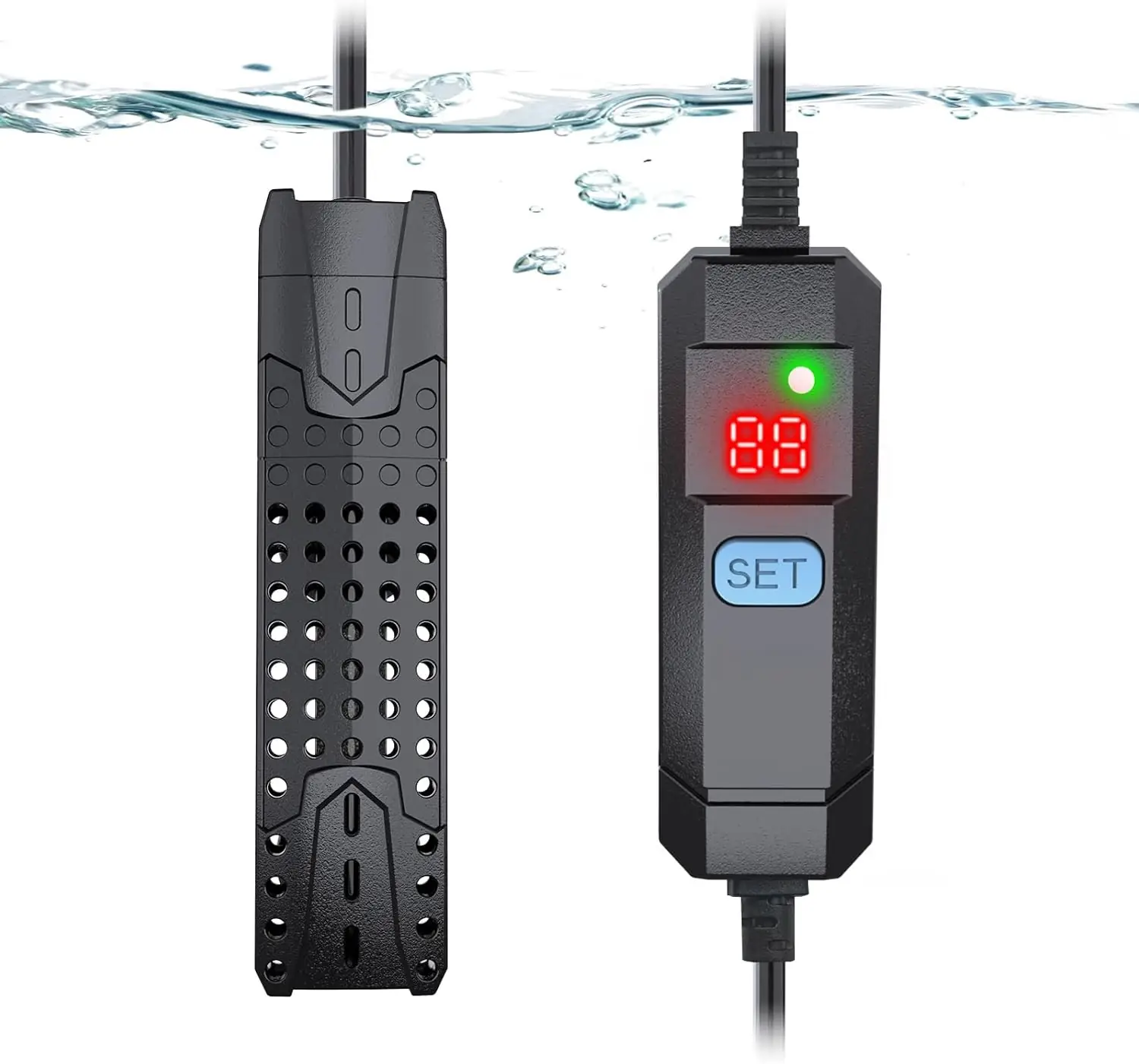
Achieving thermal stability inside a captive aquatic habitat relies heavily on matching heating output directly to enclosure volume. Aquarists routinely consult an aquarium heater size guide to determine exact electrical requirements before purchasing equipment. Choosing proper heating hardware from HiTauing prevents sudden temperature crashes during cold seasons.
Determining appropriate capacity involves balancing tank dimensions against ambient room conditions. Beginners frequently wonder what watt heater they need to avoid underpowering or overheating their setup. Integrating a properly sized aquarium heater creates a safe living environment for sensitive aquatic species.
Understanding Power Volume and Temperature Delta
Sizing thermal equipment requires understanding three main variables: total water volume, desired target temperature, and ambient room temperature. The temperature difference between target water and surrounding air represents the thermal delta that equipment must bridge continuously.
Larger temperature deltas demand higher wattage, regardless of tank capacity. For instance, maintaining a tropical environment in an unheated room forces heating elements to run longer cycles. As a rough baseline, plan for approximately 5 watts per gallon (about 1.3 W/L) for typical indoor settings; if the room is cold or unheated, add 20–30% more wattage to compensate for increased heat loss. Utilizing a reliable heater wattage calculator approach helps aquarists determine baseline power needs accurately.
Practical Examples Across Different Tank Environments
Consider a 10‑gallon tank located in a heated living room where ambient temperature rests at 20 °C (68 °F). To maintain a tropical water setting of 25 °C (77 °F), the system needs a 5 °C thermal lift. Referencing a standard heater wattage calculator indicates a 50 W unit handles this setup efficiently.
For a 40‑gallon tank placed in a cooler room at 16 °C (61 °F), achieving a target of 26 °C (79 °F) requires a 10 °C lift. Using the rough rule of 5 W per gallon plus 20 % for cold conditions, the baseline need is about 240 W, so a 200–300 W heater is recommended.
For small desktop setups, selecting compact submersible units prevents overcrowding. Installing a Submersible Aquarium Heater 25W/50W/75W/100W for 1-25 Gallon Fish Tank Heater with Intelligent Leaving Water Automatic Stop Heating System & Overheating Protection, for Fresh & Salt Water accommodates small volume requirements while maintaining precise thermal limits.
Factoring Environmental Variables and Safety Margins
Open-top rimless tanks lose heat significantly faster than aquariums equipped with tight-fitting glass lids or heavy canopies. High surface water movement from strong filter outlets also increases evaporative cooling, requiring slightly higher wattage outputs.
In drafty rooms or chilly climates, splitting total required wattage between two smaller units offers redundant protection. If one heating element fails, the secondary device prevents freezing conditions until maintenance occurs.
Modern heating hardware incorporates automated safety controls to mitigate risks during operation. Operating a Smart Aquarium Heater with Dual Safety Protection & Digital LED Temp Control,IP68 Waterproof Aquarium Heater with Overheat & Dry-Burn Protection keeps water parameters stable while displaying real-time digital temperature readouts.
Assessing Thermal Performance and Replacement Timing
Heating components undergo continuous expansion and contraction cycles that wear down internal electronics over time. Inaccurate digital displays, erratic cycling, or physical casing degradation indicate that hardware replacement is necessary.
Upgrading aging equipment before complete failure protects livestock from lethal cold snaps. Technical details regarding engineering specifications are available About HiTauing product lines designed for marine and freshwater environments. Reviewing documentation About HiTauing manufacturing standards helps aquarists select durable heating options.
Conclusion
Following a structured aquarium heater size guide allows aquarists to select appropriate power output based on volume and ambient room temperature. Calculating correct wattage prevents system strain and ensures stable environmental conditions.
Selecting reliable equipment from HiTauing provides long-term peace of mind for hobbyists and commercial operators alike. To learn more About HiTauing aquatic products or discuss hardware options, visit the official website. For direct support or order inquiries, please use the Contact Us page to speak with technical representatives.
About HiTauing
With over 20 years of expertise in aquarium equipment, we deliver reliable, innovative solutions trusted by clients in 50+ countries. Our ISO9001 certified products, global certifications, and end-to-end support make us your ideal partner for aquatic success.