

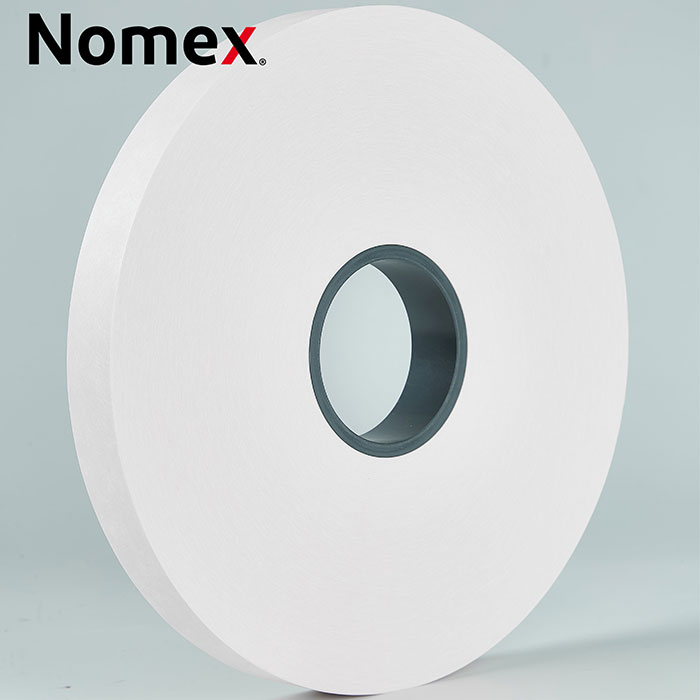
In high-demand industrial environments, a range of engineered polymers and composite materials underpin reliable electrical performance. Each insulation material contributes specific thermal, dielectric, and mechanical properties that determine durability and safety of electrical equipment. Among these materials, Nomex® aromatic polyamide stands out as a widely used solution that has shaped insulation practice for motors, transformers, and power electronics.
Material composition, thermal and dielectric properties of Nomex material
Nomex material is an aromatic polyamide (aramid) engineered for demanding electrical insulation applications. Its molecular structure provides high thermal stability and mechanical strength; nominal service temperatures for Nomex® insulation reach up to 220°C, offering margin for many winding and stator operating conditions. The material exhibits low dielectric loss, stable dielectric strength under thermal cycling, and resistance to tracking and arcing. These electrical properties reduce the likelihood of partial discharge and support consistent impregnation behavior with varnishes or resins. For B2B buyers, the presence of regulatory and safety documentation—RoHS, REACH, MSDS, and UL listings such as E34739—simplifies qualification and compliance activities. Material traceability and system-level certifications (ISO9001, ISO14001, IATF16949) provided by suppliers further reduce procurement risk.
Form factors, processing, and integration in electrical systems
Nomex insulation is available in manufacturing-friendly form factors; a common standard width is 914 mm, facilitating production of slot liners, interlayer insulation, and phase barriers. Integration requires attention to processing: cutting, die-stamping, lamination, and forming procedures affect dimensional stability and dielectric performance. Suppliers with established processing capabilities can supply application-ready components and provide A4 free samples to shorten validation cycles. Distributors such as Sui On Insulating combine distribution with processing services, enabling OEMs to source both raw material and precision-formed parts. Compatibility with impregnation chemistries, adhesive systems, and cooling strategies (air, oil, or water) must be reviewed during design to ensure long-term reliability.
Selection criteria and lifecycle considerations for nomex insulation
When specifying nomex insulation, procurement and engineering teams should evaluate thermal class alignment, electrical stress margins, certification and traceability, and supplier processing maturity. Although Nomex material typically carries a higher upfront cost than some alternatives, lifecycle benefits—reduced failure rates, extended service intervals, and fewer compliance hurdles—can lower total cost of ownership for high-reliability applications such as traction motors and high-voltage generators. The availability of certified suppliers and multi-site production reduces supply-chain risk and supports volume scaling.
Closing appraisal: Aligning Nomex selection with OEM reliability goals
Nomex material provides a documented combination of thermal resistance, dielectric stability, and mechanical durability suited to many industrial electrical systems. For OEMs, partnering with capable electrical insulation suppliers—such as Sui On Insulating, a prominent distributor and processor of Nomex® products—streamlines qualification and supports consistent manufacturing outcomes. Proper specification and processing of nomex insulation contribute to safer, longer-lived electrical equipment and more predictable production performance.