

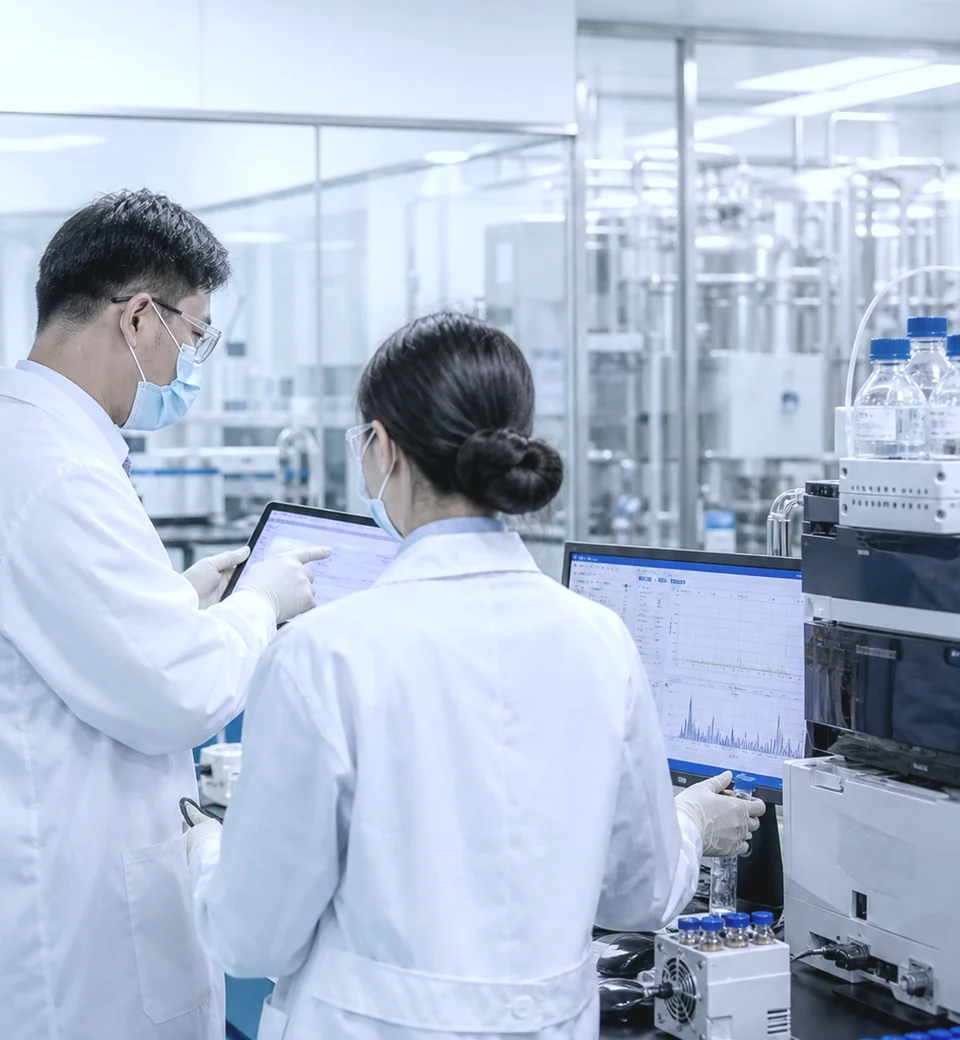
The global biopharmaceutical industry is undergoing a significant transformation as peptide-based therapeutics gain widespread acceptance across diverse clinical indications. Beyond established hormone replacement therapies, synthetic peptides are being developed for indications including metabolic disorders, cardiovascular diseases, oncology, and immunological conditions.
As drug developers advance candidates from early research stages into late-stage clinical trials and commercial distribution, the complexity of peptide supply chains increases proportionally. Procurement directors, quality control executives, and supply chain managers face the challenging task of evaluating complex chemical specifications, ensuring regulatory compliance, and securing scalable manufacturing capacity.
Transitioning from small-scale laboratory synthesis to commercial-scale output requires moving beyond simple price-per-gram metrics. Biopharmaceutical organizations must prioritize critical quality attributes, robust process analytical technology, and comprehensive batch documentation. Navigating the evolving landscape of sourcing high-quality peptide products demands a clear understanding of process chemistry, analytical characterization, and the technical safeguards necessary to maintain long-term supply stability.
Key Questions B2B Buyers Ask About Peptide API Quality
As biopharmaceutical procurement leaders and R&D managers evaluate potential global suppliers, several core technical questions arise regarding product specification and quality verification:
What critical quality attributes (CQAs) should procurement teams evaluate when sourcing active pharmaceutical ingredients? High-purity peptide sourcing requires detailed evaluation of chemical identity, purity, impurity profiles, counterion content (such as trifluoroacetate or acetate levels), residual solvent concentrations, and moisture content. Analytical techniques such as high-performance liquid chromatography (HPLC) and liquid chromatography-mass spectrometry (LC-MS) should be selected to assess purity, identity, and relevant process- and product-related impurities.
Why do technical specifications for custom peptides differ significantly between early-stage development and commercial production? Early-stage research often focuses on rapid synthesis and preliminary structural verification. Conversely, commercial manufacturing demands validated analytical methods, tight purity specifications, proven batch-to-batch consistency, and rigorous process validation. Transitioning candidate molecules to larger production scales requires refining synthesis protocols to control changes in impurity profiles.
How can biopharmaceutical organizations ensure long-term regulatory compliance and supply continuity? Maintaining regulatory compliance requires partnering with suppliers that operate robust quality management systems, maintain comprehensive batch release records, and utilize established Process Analytical Technology (PAT) to monitor synthesis parameters in real time.
Technical Engineering Challenges in Long-Chain and Modified Peptide Sourcing
Evaluating peptide quality requires an understanding of the chemical engineering obstacles inherent in modern solid-phase peptide synthesis (SPPS). As therapeutic targets become more sophisticated, molecular structures are growing increasingly complex. Modern pipelines frequently incorporate long-chain sequences, lipidation, PEGylation, cyclic disulfide bridges, and non-canonical amino acids to enhance biological half-life and target selectivity.
However, increasing structural complexity presents significant technical hurdles during scale-up:
- Coupling Efficiency and Sequence Truncation: Long-chain sequences often experience steric hindrance and aggregation during chain elongation. Without precise process optimization, incomplete coupling reaction steps generate truncated impurities that closely resemble the target sequence in physicochemical properties.
- Purification Resolution: Resolving closely related diastereomers or deletion sequences during preparative HPLC purification demands specialized stationary phases and tailored elution gradients. Achieving high purity while preserving economically viable yield is an essential operational balancing act.
- Counterion Management and Stability: Managing residual trifluoroacetic acid (TFA) and executing efficient counterion exchange processes are critical for ensuring long-term product stability and compatibility with downstream formulation requirements.
Addressing these technical obstacles requires mature SPPS capabilities, optimized coupling chemistry, and advanced analytical characterization to assess whether each commercial batch meets pre-established specifications.
Real-World Application Scenarios Across Sourcing Pipelines
Examining practical application scenarios highlights how rigorous quality evaluation applies across different stages of product development and commercial sourcing:
Scaling Commercial Production for Advanced GLP-1 Co-Agonists: Developers advancing complex peptide candidates—including Eloralintide and the GLP-1/amylin co-agonist Amycretin—may face synthesis, purification, and scale-up challenges associated with molecular complexity and modification requirements. Sourcing multi-kilogram quantities of these peptides requires partners capable of controlling coupling performance and purification recovery while maintaining batch-to-batch consistency within established specifications.
- Quality Assurance for Specialized Bioregulatory Molecules: In research environments and specialized supply networks, molecules such as BPC-157, KPV, and MOTS-c require strict purity validation, comprehensive characterization, and reliable raw material sourcing. Establishing verified purity profiles, residual solvent testing, and appropriate mass spectrometry characterization can support compliance with applicable quality and regulatory requirements.
- Establishing Validated Dual-Sourcing Networks: Commercial-stage biotechnology firms regularly contract qualified secondary partners to establish validated production lines. Diversifying supply routes across qualified facilities can reduce exposure to localized operational delays or raw material shortages.
Strategic Alignment with Global Industrialization Partners
To meet the stringent technical requirements of modern biopharmaceutical pipelines, specialized manufacturing partners provide complete industrialization infrastructure. Positioned as a dedicated global partner supporting peptide industrialization, UTIDE specializes in process development, process optimization, scale-up, and global technical support for long-chain and multi-modified peptides.
Equipped with a mature SPPS engineering platform and comprehensive analytical capabilities, UTIDE operates an annual production capacity reaching 2,000 kg. Its industrialization services and quality management system support pharmaceutical enterprises, biotechnology companies, CDMO partners, and API suppliers in planning and managing large-scale peptide manufacturing projects in accordance with applicable quality requirements.
Building Long-Term Sourcing Resilience for Next-Generation Peptide APIs
As global demand for therapeutic peptides continues to expand across metabolic disease, oncology, and targeted immunology, establishing rigorous quality criteria and dependable sourcing networks is essential. By moving beyond short-term procurement paradigms and collaborating with experienced manufacturing partners early in development, biopharmaceutical companies can effectively mitigate scale-up risks, support batch consistency, and protect commercial launch schedules.
Prioritizing robust process development, transparent quality documentation, and scalable production capacity remains the foundation for long-term success in commercial peptide manufacturing.