

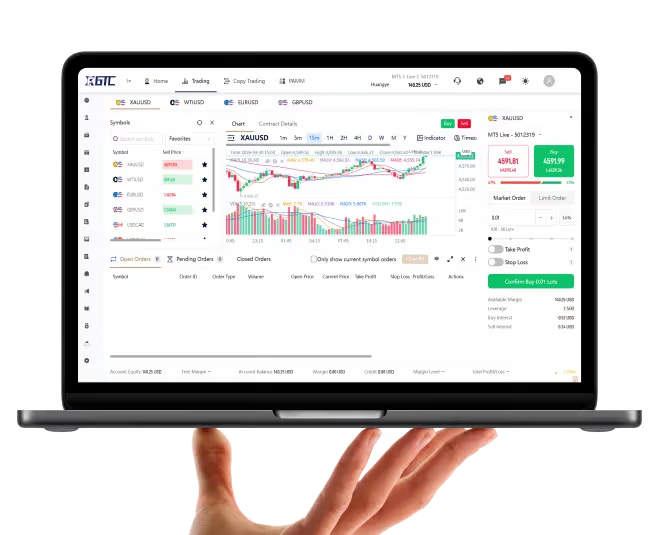
Selecting a CFD broker is more than comparing spreads or downloading a trading platform. Most traders care about execution quality, account terms, and risk controls. At the same time, they want transparency about who holds their account agreement and how leverage and margin requirements work in practice. This guide explains what to compare before you choose a CFD broker, with practical considerations for anyone who plans to trade CFDs using GTCFX.
What a CFD Broker Does and Why It Matters
A CFD broker provides access to derivative markets where you trade based on price movement without owning the underlying asset. In a typical CFD setup, you open a position using margin, and leverage allows you to control a larger exposure than your account balance would otherwise permit. Because CFDs are leveraged instruments, your broker’s trading conditions, execution approach, and risk features can affect your results.
When reviewing a CFD broker, focus on the items that influence your daily trading experience. These include instrument access, account types, spread and commission structure, platform stability, and how stop out and margin behaviors are handled during fast market moves.
Key Features to Compare Before You Trade CFDs
Trading Instruments and Market Access
Not every CFD broker offers the same range of markets. If your strategy depends on specific instruments, confirm the broker supports them consistently and across account types. GTCFX presents access to multiple categories such as forex CFDs, indices CFDs, metal CFDs, energy and commodities CFDs, shares or equity CFDs, crypto CFDs, and futures CFDs. Wider instrument coverage can help you diversify trading ideas without needing multiple brokers.
Also consider whether your chosen instruments have trading schedules that fit your routine. If you plan to trade beyond standard hours, check the availability for the markets you follow. GTCFX promotes 24/5 trading access, which can be relevant for traders who monitor price action across different time zones.
Spread Structure and Commission Clarity
One of the most practical aspects of choosing a CFD broker is understanding costs. Many traders compare spreads, but you also need to know how commissions may apply. Some accounts are described as having zero commission with spreads from a stated level, while other accounts emphasize raw market execution with a commission per lot.
Before you trade CFDs, verify which cost model matches your trading frequency. If you scalp or trade with expert advisors, commission and execution consistency may matter as much as spread size. If you place fewer trades and hold positions longer, spread levels and overall margin efficiency may matter more.
GTCFX outlines account options with spreads from 1.0 pips on a standard option and 0.0 pips on an ECN option, paired with commission details for the ECN model. Reviewing these side by side can help you estimate whether your strategy’s typical trade count and average holding time will produce reasonable total costs.
Leverage and Margin Requirements
Leverage attracts many traders, but it can also increase risk. A CFD broker sets the maximum leverage available and determines how margin is calculated for each instrument. Lower margin requirements may allow you to open positions with less capital, but you should still evaluate how likely you are to reach stop out during volatility.
GTCFX states leverage up to 1:2000 with minimal margin requirements starting from 0.1%. It also describes dynamic leverage that adjusts based on your positions. When reviewing leverage features, consider your risk management plan first. Use the leverage information to size positions appropriately, rather than treating leverage as a reason to increase exposure.
Execution Speed and Reliability
Fast execution matters when spreads widen or when price moves quickly. While traders may not see a difference in every trade, delays and inconsistent fills can affect strategy outcomes. GTCFX references fast execution under 10 milliseconds. Even with such claims, the best approach is to evaluate execution during live market conditions. A free demo account can help you test platform responsiveness, order handling, and whether your orders are filled as expected.
Risk Controls and Stop Out Protection
Because CFDs can move against you rapidly, risk controls are essential. Many traders ask what happens when their margin level falls and whether there is additional stop out protection. GTCFX mentions 20% stop out protection that provides more flexibility for positions before automatic closure.
This type of feature should not replace careful position sizing. Instead, it should be viewed as an additional layer that can help manage unexpected volatility. As you compare CFD brokers, read the risk disclosure content and understand the stop out logic in plain language, including when positions may be reduced or closed.
Platform and Account Experience
MT4 and MT5 Plus a Dedicated App
A CFD broker should support the trading workflow you prefer. Some traders rely on MT4 for classic tooling and familiarity. Others prefer MT5 for modern charting and features. GTCFX offers MT4 and MT5 platforms, and also promotes GTC Go as a trade and invest experience through a mobile app.
Before you commit, confirm the platform supports the order types you use, including market and pending orders. Check whether it provides adequate charting tools, alerts, and mobile usability. A reliable platform can reduce mistakes when markets move quickly.
Account Types Matched to Trader Style
Account choice should connect to how you trade. GTCFX describes a Standard account designed for everyday trading with full platform access and spreads from 1.0 pips and $0 commission. It also describes an ECN account for active traders focused on raw market access, 0.0 pip spreads, transparent commission per lot, and ECN execution suited for scalpers and automated strategies.
If you use expert advisors, review whether your account type supports the execution speed and pricing model you expect. If you trade manually with fewer entries, a simpler cost model may be easier to manage. The goal is alignment between your strategy and the account design.
Regulations, Counterparty Roles, and Client Agreement Clarity
Many users worry about where their trades are held and which entity is responsible for the product. This is especially important for cross border traders. GTCFX provides detailed information about its operating structure, including that one entity is an authorized financial services provider in South Africa and that the relevant product issuer depends on jurisdiction and onboarding route.
When choosing a CFD broker, read the legal documents and the client agreement language. Identify the contracting entity before you open an account. Ensure you understand whether the broker acts as an intermediary and who functions as the product issuer or counterparty under the applicable terms. This clarity can help reduce uncertainty during disputes and improve confidence about the onboarding process.
Demo Accounts and Onboarding Steps
If you are planning to trade CFDs for the first time, practice before you deploy capital. GTCFX offers a free demo account alongside live account options. A demo period helps you test platform navigation, order entry, and your ability to apply risk controls. Use it to evaluate whether spreads and execution behavior match your expectations.
During live onboarding, complete the registration flow carefully. GTCFX’s registration fields include country selection and identity steps such as OTP verification. After account creation, confirm deposit and withdrawal procedures so you understand funding timelines and the documentation required for compliance.
Evaluating the Right CFD Trading Setup
Choosing a CFD broker requires more than looking at one number. To trade CFDs effectively, compare instrument availability, cost structure, leverage and margin behavior, execution reliability, and risk controls such as stop out protection. GTCFX presents a multi market CFD environment with defined account types, MT4 and MT5 platform options, and stated features around leverage, execution speed, and risk management. By reviewing these elements alongside the legal and onboarding details, you can make a more confident decision and build a trading setup that supports your strategy and your risk tolerance.