

Selecting a supplier for medium-voltage electrical distribution equipment is a strategic decision that carries long-term implications for operational reliability, project costs, and regulatory compliance. For engineering procurement and construction (EPC) firms, utility operators, and industrial facility managers, the choice extends far beyond initial price quotes. The global market presents a crowded field of manufacturers, yet not all possess the engineering depth, quality control systems, or after-sales infrastructure required for critical infrastructure applications.
As renewable energy installations expand and aging grids undergo modernization, the situation has become increasingly serious. A poorly specified switchgear solution can lead to unplanned downtime, safety hazards, and costly retrofit projects. Conversely, the right partnership delivers decades of trouble-free service, streamlined project execution, and technical support that anticipates evolving grid demands.
This article examines the essential criteria that procurement professionals and project engineers should evaluate when assessing potential medium voltage switchgear suppliers, moving beyond surface-level attributes to uncover the factors that truly differentiate market leaders from the rest.
Technical Capability and Product Portfolio Depth
The first and most obvious consideration is whether a supplier’s product range actually aligns with your specific application requirements. Medium voltage switchgear suppliers typically offer equipment rated from 3.6 kV to 40.5 kV, but the internal configurations—air-insulated, gas-insulated, or solid-insulated—vary significantly in performance characteristics. For outdoor substations in coastal environments, corrosion resistance and ingress protection ratings become paramount. For indoor industrial plants, compact footprints and ease of maintenance may take priority.
A supplier with a narrow product line may force you to compromise on design objectives, whereas a manufacturer with comprehensive offerings allows for optimized solutions tailored to each project phase. Beyond the switchgear itself, evaluate whether the supplier provides complementary components such as protection relays, metering devices, and automation interfaces. Integrated solutions reduce interface risks between multiple vendors and simplify commissioning workflows.
Furthermore, scrutinize the supplier’s track record with similar voltage classes and fault current ratings to your project. Request reference installations and ask about any derating factors applied under extreme temperatures or altitudes. Technically proficient medium voltage switchgear suppliers will readily share test reports, type-testing certificates, and factory acceptance test protocols that demonstrate compliance with international standards such as IEC 62271 or ANSI C37.
Quality Assurance, Manufacturing Standards, and Supply Chain Resilience
Even the most advanced design loses value if production quality is inconsistent. When vetting potential medium voltage switchgear suppliers, demand transparency regarding their manufacturing facilities, quality management certifications, and supplier qualification processes. ISO 9001 is a baseline, but look for additional accreditations like ISO 14001 for environmental management and OHSAS 18001 for occupational safety, which indicate a mature operational culture. On-site factory audits remain one of the most effective due diligence tools—observe welding procedures, assembly cleanliness, partial discharge testing stations, and calibration records for test equipment.
Equally critical is the supplier’s supply chain strategy. Global component shortages have exposed the fragility of just-in-time inventory models. Ask about lead times for critical parts like vacuum interrupters, operating mechanisms, and bushings. Do they maintain safety stock? Have they diversified sourcing across multiple geographies? Medium voltage switchgear suppliers with vertically integrated production—controlling casting, machining, and assembly in-house—typically demonstrate greater schedule reliability and quality consistency than those reliant on third-party subcontractors.
Additionally, investigate their non-conformance reporting and corrective action procedures. A supplier that proactively shares quality metrics and improvement roadmaps signals a commitment to continuous enhancement rather than reactive problem-solving.
Lifecycle Support, Service Network, and Digital Integration
The purchase contract marks the beginning, not the end, of the supplier relationship. Long after commissioning, your team will depend on the manufacturer for spare parts availability, technical advisory, and upgrade pathways. Therefore, assess the geographic coverage and response time commitments of the supplier’s service network. Are field service engineers stationed within reasonable proximity to your project sites? Do they offer 24/7 remote diagnostic support? Consider also the availability of training programs for your maintenance crews—hands-on instruction on racking procedures, interlock mechanisms, and troubleshooting logic reduces human-error risks.
In the era of digital substations, forward-looking medium voltage switchgear suppliers now embed condition monitoring sensors and communication gateways within their equipment. These IoT-enabled features enable predictive maintenance, thermal tracking, and partial discharge trend analysis, transforming switchgear from a passive asset into an active data node. Evaluate whether the supplier’s digital platform is open-architecture or proprietary, as this affects future integration with your existing supervisory control and data acquisition (SCADA) systems.
Documentation completeness also matters: request operation manuals, wiring diagrams, and maintenance schedules upfront to gauge the supplier’s commitment to transparency and user-friendliness. A supplier that treats post-sale support as a profit center rather than a core service obligation is one to approach with caution.
Strategic Alignment: Partnering for the Energy Transition
The evaluation process outlined above—technical fit, manufacturing integrity, and lifecycle engagement—provides a structured framework for comparing competing offers. Yet beyond checklists and scorecards, procurement leaders should also assess the supplier’s strategic vision. The electrical industry is undergoing a fundamental transformation, driven by decarbonization targets and the proliferation of distributed energy resources. The ideal partner will not merely sell you a standalone switchgear panel but will actively contribute to your project’s resilience and sustainability goals.
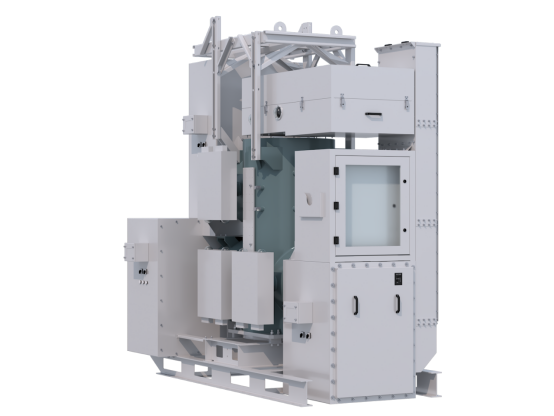
This is where Daqo Group distinguishes itself within the landscape of medium voltage switchgear suppliers. Daqo Group delivers integrated solutions that support the global energy transition, from smart substations and renewable energy integration platforms to automation systems and a full range of medium- and low-voltage equipment. Their DQC-72.5 Eco-Friendly Gas-Insulated Digital Switchgear exemplifies this forward-thinking approach—an innovative medium-voltage switchboard that uses clean air as its insulating medium, offering an environmentally responsible alternative to sulfur hexafluoride (SF₆) designs. Its fully enclosed construction isolates all live components, ensuring safety and reliability even in the demanding environments of offshore wind turbine towers. As a maintenance-free product, it reduces operational expenses while delivering robust performance for specialized medium-voltage applications.
Ultimately, the right supplier choice transcends transactional considerations; it establishes a foundation for safe, efficient, and sustainable power distribution over the full asset lifecycle. By prioritizing technical depth, quality rigor, and long-term support, and by seeking partners like Daqo Group that are actively shaping the future of grid technology, you position your organization for operational excellence in an era of rapid energy evolution.